
Sudhir Mangla
Sudhir Mangla is the Sr. Director of Technology at SVAM International and the founder of Developers Voice | The Software Architects Hub. With over 22 years of hands-on experience, he has built, designed, and scaled enterprise software solutions spanning from legacy C++/Visual C++ systems to modern cloud-native, AI-powered .NET ecosystems.
His technical expertise covers the full modern stack: .NET 8/9, ASP.NET Core, Blazor, Web API, Azure Functions, Angular, React, SQL Server, Oracle, Entity Framework Core, Azure DevOps, Apache Solr, Kafka, and more. Sudhir has architected solutions across diverse paradigms—from N-tier monoliths to microservices and cutting-edge serverless architectures—always prioritizing robustness, security (OWASP Top 10), and clean-code principles like SOLID, DRY, and YAGNI.
Sudhir is a pioneer in leveraging AI-assisted development tools, including Claude Code, GitHub Copilot, and Cursor AI, to accelerate software design, refactoring, and documentation. His work increasingly integrates data analytics and intelligent automation using AI APIs such as OpenAI, Claude, and Gemini, revolutionizing how teams approach system insights, architectural validation, and developer productivity.
At Developers Voice, Sudhir’s mission is to empower software architects and developers with clear, actionable insights on architecture patterns, design principles, and real-world implementation strategies. His daily content includes comprehensive guides on:
- Software & Cloud Architecture Patterns (CQRS, Event Sourcing, FinOps, Polyglot Persistence, Edge-Native, Micro-Frontends)
- .NET and C# Best Practices (Clean Code, Performance Tuning, API Security, SOLID Principles)
- Enterprise Cloud Solutions (Azure, AWS, AI Integration, DevSecOps, Power Platform)
- Cutting-Edge Technologies (GenAI, Prompt Engineering, WASM, eBPF, React Server Components, .NET MAUI)
Sudhir bridges theory with hands-on guidance, helping engineers design and deliver high-quality, maintainable, secure, and scalable software systems. His goal is to keep architects and developers at the leading edge of architectural thinking with practical, in-depth knowledge tailored for real-world success.
Connect: sudhirmangla [at] gmail [dot] com
The Architect's Guide to Vibe Coding Workflow: Mastering the AI Development Loop
- Sudhir Mangla
- AI & Machine Learning,Technology
- 20 Nov, 2025
1 Introduction: The Shift from Syntax to Intent Software development has always involved trade-offs between speed, clarity, and long-term maintainability. As AI-assisted development becomes mainst
Read More
Beyond SOLID in Modern C#: Smart Enums, Discriminated Unions & Railway-Oriented Programming
1 The Paradigm Shift: Why SOLID Is No Longer Enough For almost two decades, SOLID provided the mental scaffolding most of us used to structure C# applications. It gave us consistency and encourage
Read More
BookMyShow's Seat Selection Architecture: Distributed Locks, Payment Orchestration, and Zero Double-Bookings at Scale
1 Architectural Blueprint: Designing for 1 Million Daily Bookings When you design a seat-selection and booking system that behaves like BookMyShow or Ticketmaster, the core challenge is simple to
Read More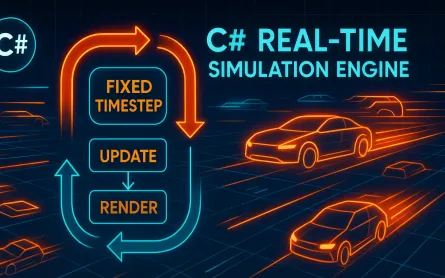
Architecting a Game Loop in C#: Building a Real-Time Simulation Engine Step by Step
- Sudhir Mangla
- C#,Performance Optimization
- 17 Nov, 2025
1 The Philosophy of Time: Simulations vs. Reactive Systems Real-time simulation engines live in a different world from typical business applications. They don’t respond to a request and return a r
Read More
Designing Active-Active .NET APIs on Azure: Front Door, Traffic Manager, and Multi-Region Failover
- Sudhir Mangla
- Azure,Cloud Architecture
- 16 Nov, 2025
1 The "Why": Moving Beyond Regional HA to Global Active-Active Most teams reach a point where adding more App Service instances or scaling out a Kubernetes cluster inside a single Azure region doe
Read More
Mastering LINQ in C#: From Readable Queries to High-Performance Data Pipelines
- Sudhir Mangla
- C#,Performance Optimization
- 15 Nov, 2025
1 Introduction: LINQ's Two Faces—Clarity and Cost Every experienced .NET developer has a story that starts with “it worked fine in dev, but production melted.” More often than not, LINQ is somewhe
Read More
The Platform Engineering Handbook: Building Golden Paths, Service Catalogs, and Developer Portals with Backstage and Azure
- Sudhir Mangla
- DevOps & CI/CD,Azure
- 14 Nov, 2025
1 The Platform Engineering Shift: Why .NET Teams Need a Portal Modern .NET teams ship to Azure faster than ever, but the operational surface area keeps expanding. Each new microservice introduces
Read More
The Ultimate Guide to AI Code Generation: Vibe Coding, Prompt Engineering, and Mastering the New SDLC
1 The New Era of AI-Driven Development AI has moved from novelty to necessity in modern software engineering. Frameworks like ASP.NET Core 8, Entity Framework Core, and frontend stacks suc
Read More
Building Uber's Dynamic Pricing Engine in .NET: Supply-Demand Algorithms, Geospatial Indexing, and Real-Time Market Simulation
- Sudhir Mangla
- Practical Design,Data Engineering
- 13 Nov, 2025
1 Building Uber’s Dynamic Pricing Engine in .NET: Supply-Demand Algorithms, Geospatial Indexing, and Real-Time Market Simulation Uber’s pricing engine is one of the most fascinating real-time syst
Read More
Memory Management Masterclass: Stack vs Heap, Span<T>, Memory<T>, and ArrayPool in High-Performance C#
- Sudhir Mangla
- .NET,Performance Optimization
- 12 Nov, 2025
1 Introduction: The Business Case for High-Performance Memory Most .NET developers learn memory management in passing — stack vs heap, value vs reference types, garbage collection. But few interna
Read More