
Sudhir Mangla
Sudhir Mangla is the Sr. Director of Technology at SVAM International and the founder of Developers Voice | The Software Architects Hub. With over 22 years of hands-on experience, he has built, designed, and scaled enterprise software solutions spanning from legacy C++/Visual C++ systems to modern cloud-native, AI-powered .NET ecosystems.
His technical expertise covers the full modern stack: .NET 8/9, ASP.NET Core, Blazor, Web API, Azure Functions, Angular, React, SQL Server, Oracle, Entity Framework Core, Azure DevOps, Apache Solr, Kafka, and more. Sudhir has architected solutions across diverse paradigms—from N-tier monoliths to microservices and cutting-edge serverless architectures—always prioritizing robustness, security (OWASP Top 10), and clean-code principles like SOLID, DRY, and YAGNI.
Sudhir is a pioneer in leveraging AI-assisted development tools, including Claude Code, GitHub Copilot, and Cursor AI, to accelerate software design, refactoring, and documentation. His work increasingly integrates data analytics and intelligent automation using AI APIs such as OpenAI, Claude, and Gemini, revolutionizing how teams approach system insights, architectural validation, and developer productivity.
At Developers Voice, Sudhir’s mission is to empower software architects and developers with clear, actionable insights on architecture patterns, design principles, and real-world implementation strategies. His daily content includes comprehensive guides on:
- Software & Cloud Architecture Patterns (CQRS, Event Sourcing, FinOps, Polyglot Persistence, Edge-Native, Micro-Frontends)
- .NET and C# Best Practices (Clean Code, Performance Tuning, API Security, SOLID Principles)
- Enterprise Cloud Solutions (Azure, AWS, AI Integration, DevSecOps, Power Platform)
- Cutting-Edge Technologies (GenAI, Prompt Engineering, WASM, eBPF, React Server Components, .NET MAUI)
Sudhir bridges theory with hands-on guidance, helping engineers design and deliver high-quality, maintainable, secure, and scalable software systems. His goal is to keep architects and developers at the leading edge of architectural thinking with practical, in-depth knowledge tailored for real-world success.
Connect: sudhirmangla [at] gmail [dot] com
Practical Blazor SSR + WASM Hybrid Architecture for High-Performance .NET Frontends
- Sudhir Mangla
- Frontend Development,.NET
- 13 Jan, 2026
1 The Paradigm Shift: Blazor as a Unified Web Framework Modern .NET teams are expected to deliver web applications that feel fast, work reliably across devices, rank well in search engines, and st
Read More
FastAPI vs Django vs Flask in 2026: Choosing the Right Python Web Framework
- Sudhir Mangla
- Python,Software Architecture
- 12 Jan, 2026
1 The 2026 Python Web Landscape: A Shift in Gravity The Python web ecosystem in 2026 is shaped less by fashion and more by pressure. Backends are no longer just serving CRUD endpoints or HTML temp
Read More
Azure Front Door vs. Cloudflare vs. AWS CloudFront: The 2026 Guide for Global .NET Applications
- Sudhir Mangla
- Cloud Architecture,Azure
- 10 Jan, 2026
1 The Modern Edge: Why the "CDN" Label is Outdated Many .NET teams still think of Azure Front Door, Cloudflare, and AWS CloudFront as CDNs whose main job is serving static files. That view made se
Read More
Implementing Audit Logging in .NET: Change Tracking, Compliance, and Queryable History
- Sudhir Mangla
- .NET,Database
- 08 Jan, 2026
1 The Strategic Value of Audit Logging in Modern .NET Architecture Audit logging is no longer a “nice to have” or something you add late in a project when bugs appear. In modern .NET systems—espec
Read More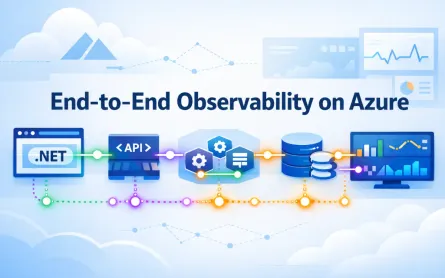
End-to-End Observability for .NET on Azure: OpenTelemetry, Application Insights, and Azure Monitor
- Sudhir Mangla
- Azure,Cloud Architecture
- 07 Jan, 2026
1 The Modern Observability Stack: Architecture and Strategy Modern .NET applications on Azure are rarely simple, single-process systems. They usually consist of multiple services, background worke
Read More
The Hidden Complexity of Digital Maps: How Google and Apple Know About That New Coffee Shop
- Sudhir mangla
- Technology,Practical Design
- 06 Jan, 2026
1 Introduction: The Illusion of Simplicity Most people open a maps app, type “coffee,” and expect useful results almost instantly. They don’t think about what happens next, and honestly, they shou
Read More
The Economics of Cloud Computing: Why Your AWS Bill Keeps Growing (And What Finance Thinks About It)
- Sudhir Mangla
- AWS,Cloud Architecture
- 05 Jan, 2026
1 Introduction: The $10,000 Surprise and the "Value" Shift A familiar scene plays out in many engineering teams. A high-visibility service finally goes live after weeks of load testing, late night
Read More
End-to-End Validation in .NET: Shared Contracts Between ASP.NET Core, TypeScript, and FluentValidation
- Sudhir Mangla
- .NET,API Design
- 31 Dec, 2025
1 The Architecture of Single-Source Validation Most senior developers have dealt with validation drift, even if they don’t call it that. The backend enforces one set of rules. The frontend enforce
Read More
Movie Review Aggregation: Web Scraping, Score Normalization, and Real-Time Updates like Rotten Tomatoes
- Sudhir Mangla
- Practical Design,Data Engineering
- 30 Dec, 2025
1 Architectural Blueprint: Moving Beyond Simple Scraping Most movie review aggregators begin as small utilities: fetch a page, scrape a number, store it somewhere. That works for a prototype, but
Read More
Async/Await Beyond the Basics in C#: Practical Concurrency Patterns for Real-World APIs
- Sudhir Mangla
- C#,Performance Optimization
- 29 Dec, 2025
1 Introduction: The Architect's View of Concurrency Modern .NET applications rely heavily on async/await to stay responsive and scale across machines, cores, and networks. The syntax makes async
Read More