Blog Posts
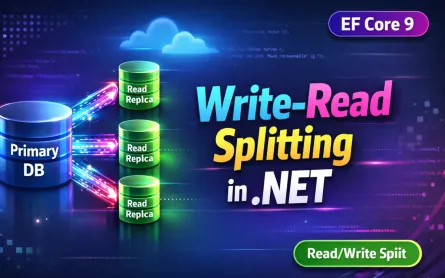
Read Replicas and Write-Read Splitting in .NET Applications
- Sudhir Mangla
- Database,Performance Optimization
- 02 Feb, 2026
1 Foundations of Read-Scale Architecture A read-scale architecture separates transactional write operations from computationally expensive read workloads. In real-world .NET systems, the primary d
Read More
Mobile App Performance Budgets: Startup Time, Frame Rate, and Battery Drain Metrics That Actually Matter
1 The Performance Budget Philosophy: Why Speed is a Trust Signal in 2026 Mobile engineering teams in 2026 operate under very different constraints than even a few years ago. Devices ship with high
Read More
Data Encryption at Rest and In Transit for .NET Applications | Practical Security Guide
- Sudhir mangla
- Security,.NET
- 29 Jan, 2026
1 The Modern .NET Security Landscape: Defense-in-Depth vs. Zero Trust Modern .NET applications rarely operate in isolated environments. They run in public clouds, communicate through APIs, and rel
Read More
Internationalization Architecture for Global .NET Applications | ICU, Localization, and Cultural Formatting
- Sudhir Mangla
- Software Architecture,.NET
- 28 Jan, 2026
1 The Modern .NET Internationalization Strategy Global .NET applications now operate across dozens of locales, currency systems, writing systems, and cultural conventions. The problem space is no
Read More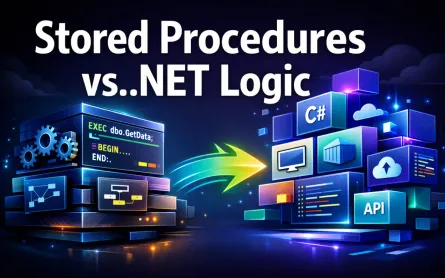
Modernizing Stored Procedure-Heavy Applications: When to Move Logic to .NET
- Sudhir Mangla
- Database,Software Architecture
- 27 Jan, 2026
1 The Legacy Debt: Understanding the Stored Procedure Gravity Most enterprise systems built between 2000 and 2018 relied heavily on stored procedures (SPs) as the primary home for business logic.
Read More
Claude Code in 2026: A Practical End-to-End Workflow Across the SDLC
- Sudhir mangla
- AI & Machine Learning,Generative AI
- 26 Jan, 2026
1 The Agentic Shift: Software Engineering with Claude Code Software engineering is evolving, but not in the way most trend pieces describe. Teams still write code, review pull requests, and run pr
Read More
The Power Grid Explained: How Electricity Travels from Power Plant to Your Outlet in Milliseconds
- Sudhir mangla
- Technology,Software Architecture
- 25 Jan, 2026
1 The Invisible Speed of Light: Introduction to the Grid Electricity feels instant. You flip a switch, and the light turns on with no noticeable delay. What makes that possible isn’t stored energy
Read More
Redis Beyond Caching: Streams, Pub/Sub, and Data Structures for Real-Time Applications
- Sudhir Mangla
- Data Engineering,Database
- 23 Jan, 2026
1 The Paradigm Shift: Redis as a Primary Multi-Model Database Redis is no longer just a fast in-memory cache sitting in front of a “real” database. Many teams now run Redis as a primary, latency-c
Read More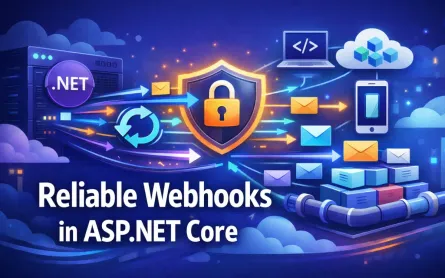
Building Webhooks in ASP.NET Core: Delivery Guarantees, Retries, and Security
- Sudhir Mangla
- API Design,Security
- 22 Jan, 2026
1 Architectural Foundations of Modern Webhook Systems Webhook systems look simple from the outside—“send an HTTP POST when something changes.” In practice, that mental model breaks down quickly on
Read More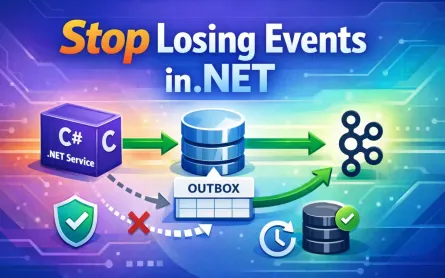
Outbox Pattern in .NET: The Missing Piece After Idempotent APIs
1 The Dual Write Dilemma: Why Idempotency is Not Enough Distributed systems usually don’t fail because of obvious bugs. They fail because two things that must happen together are handled separat
Read More