Abstract
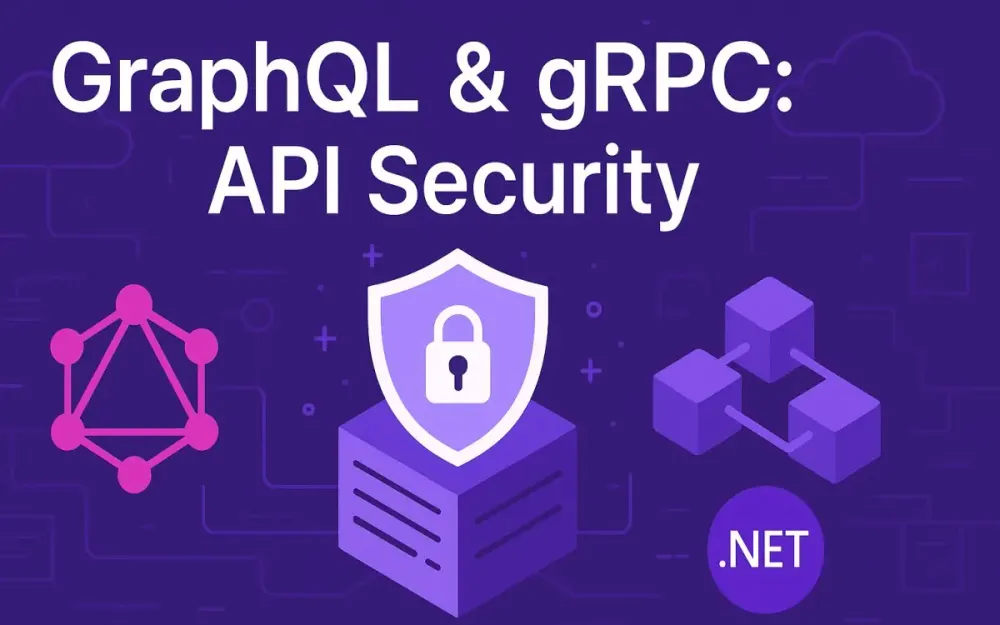
The dominance of RESTful APIs is gradually giving way to more dynamic, high-performance paradigms such as GraphQL and gRPC. While REST brought clarity and standardization to web services, its security models were tailored for resource-centric interactions, not the operation- and schema-driven patterns emerging today. As architects and senior developers adopt GraphQL and gRPC within ASP.NET Core to meet the needs of modern applications, they must also navigate a shifting threat landscape with new, protocol-specific vulnerabilities. This article presents a comprehensive, practical guide to hardening GraphQL and gRPC endpoints in ASP.NET Core. We will explore why REST-era best practices fall short, unpack the nuanced risks unique to these paradigms, and deliver code-level strategies and architectural patterns for robust, resilient API security.
1 Introduction: The Evolving API Landscape and Its Security Implications
1.1 Beyond REST: Why GraphQL and gRPC are Gaining Traction
1.1.1 The Pull of GraphQL: Flexible, Client-Driven Queries
In the last decade, REST APIs became the backbone of digital transformation. They worked well for many scenarios, but cracks started to show as clients demanded more agility. Have you ever had to create multiple REST endpoints just to serve different UI screens or aggregate data for a mobile app? If so, you’ll understand why GraphQL has become so attractive.
GraphQL allows clients to query exactly what they need—nothing more, nothing less. A single endpoint, powered by a type system, lets consumers shape their responses with remarkable precision. This reduces over-fetching, under-fetching, and the dreaded “REST endpoint explosion.” For front-end teams, it feels liberating. For back-end architects, it introduces a new layer of abstraction and power, but also a new set of security concerns.
1.1.2 The Push for gRPC: High-Performance, Contract-First Communication
Where GraphQL is about query flexibility, gRPC is about speed, consistency, and type safety. Born out of Google and built on HTTP/2, gRPC leverages Protocol Buffers for binary serialization and enforces API contracts through strongly-typed definitions. Service-to-service communication in microservice architectures, streaming scenarios, and environments where low latency is critical are ideal use cases for gRPC.
Unlike REST or even GraphQL, gRPC endpoints are typically method-centric. They can stream large volumes of data, negotiate schemas at compile time, and operate efficiently over the wire. The trade-off? Protocol-level security assumptions, binary formats, and different surface areas for attack.
1.2 The Shifting Threat Surface: Why REST Security Models are Insufficient
1.2.1 Moving from Resource-Based to Operation-Based Security
Traditional REST APIs tend to revolve around resources (users, orders, products). Security is often about controlling access to those resources via HTTP verbs. But GraphQL and gRPC move us toward operation-based thinking:
- GraphQL exposes an entire type system and lets clients request arbitrary data trees. Every query is, in effect, a custom operation.
- gRPC exposes method calls rather than generic resources, making endpoint-level authorization more complex.
This paradigm shift complicates authorization and introduces the risk of “overly broad” exposure if queries or methods aren’t tightly controlled.
1.2.2 New Attack Vectors: Introspection, Query Depth, and Protocol Buffers
GraphQL and gRPC endpoints are susceptible to attacks that REST never had to contend with, including:
- GraphQL Introspection Leaks: Attackers can probe the schema, revealing all types, queries, and mutations.
- Query Complexity Attacks: Deeply nested or recursive queries can cripple server performance.
- gRPC Binary Abuse: Malformed or malicious protocol buffer messages may slip past traditional input validation, exploiting subtle bugs.
Security teams accustomed to REST might not be watching for these vectors.
1.3 Article Goals and Target Audience: A Practical Guide for Architects
If you’re designing or maintaining ASP.NET Core services that expose GraphQL or gRPC endpoints, this article is for you. We’ll take a hands-on approach, looking at how these technologies change the game for API security, where the common pitfalls are, and—most importantly—how to proactively harden your services using proven patterns and the latest .NET capabilities. You’ll see code samples, real-world scenarios, and concrete recommendations to help you build secure, future-ready APIs.
2 Foundational Security Principles in ASP.NET Core
Before diving into protocol-specific measures, it’s crucial to understand the security backbone of ASP.NET Core itself. These fundamentals provide the scaffolding upon which all advanced protections are built.
2.1 The ASP.NET Core Security Ecosystem: A Quick Refresher
2.1.1 Authentication Middleware (JWT Bearer, OpenID Connect)
Authentication verifies the identity of callers—API clients, users, or services. ASP.NET Core supports pluggable authentication middleware. Two of the most common for modern APIs are:
- JWT Bearer Authentication: This uses JSON Web Tokens (JWT) passed in HTTP headers. They’re self-contained and often used with OAuth 2.0 or OpenID Connect.
- OpenID Connect: An identity layer on top of OAuth 2.0, enabling single sign-on and federation.
Here’s how you might configure JWT authentication in Program.cs (using .NET 8 minimal APIs):
var builder = WebApplication.CreateBuilder(args);

builder.Services.AddAuthentication("Bearer")
    .AddJwtBearer("Bearer", options =>
    {
        options.Authority = "https://identity.example.com";
        options.TokenValidationParameters = new TokenValidationParameters
        {
            ValidateAudience = false
        };
    });

var app = builder.Build();

app.UseAuthentication();
app.UseAuthorization();
2.1.2 Authorization Policies and Handlers
Authorization determines what an authenticated principal can do. ASP.NET Core’s policy-based authorization lets you create fine-grained rules, often leveraging claims, roles, or custom requirements.
Example: Requiring a specific claim to execute a mutation in GraphQL or invoke a method in gRPC.
builder.Services.AddAuthorization(options =>
{
    options.AddPolicy("AdminOnly", policy =>
        policy.RequireClaim("role", "Admin"));
});
Custom handlers can further tailor logic:
public class MinimumAgeRequirement : IAuthorizationRequirement
{
    public int MinimumAge { get; }
    public MinimumAgeRequirement(int minAge) => MinimumAge = minAge;
}
2.1.3 The Role of Dependency Injection in Secure Design
ASP.NET Core is built around dependency injection (DI), promoting loose coupling and testability. For security, DI enables the injection of trusted services—such as token validators, logging, and user context providers—rather than relying on static or global state.
This is especially important in multi-tenant or distributed systems, where context can vary per request.
2.2 Establishing a Secure Baseline: Cross-Cutting Concerns
2.2.1 HTTPS Everywhere: Enforcing Transport Layer Security (TLS)
All API endpoints should require HTTPS. Plain HTTP exposes tokens, credentials, and sensitive data to interception.
In ASP.NET Core, HTTPS enforcement is straightforward. You can redirect all HTTP requests to HTTPS:
app.UseHttpsRedirection();2.2.2 Modern TLS Configuration in Kestrel
Beyond simply enabling HTTPS, modern TLS configuration is vital for defending against protocol downgrade attacks and ensuring strong encryption.
Kestrel, the cross-platform web server for ASP.NET Core, allows granular TLS settings:
builder.WebHost.ConfigureKestrel(serverOptions =>
{
    serverOptions.ConfigureHttpsDefaults(httpsOptions =>
    {
        httpsOptions.SslProtocols = SslProtocols.Tls13 | SslProtocols.Tls12;
        httpsOptions.OnAuthenticate = (context, sslOptions) =>
        {
            // Additional certificate validation or logging here
        };
    });
});
Aim to use TLS 1.2 and above. Avoid deprecated protocols (TLS 1.0, 1.1) and weak ciphers.
2.2.3 Principles of Secure Coding: Input Validation, Output Encoding, and Least Privilege
Regardless of protocol, secure APIs share foundational practices:
- Input Validation: Never trust client input. Validate data size, type, and format.
- Output Encoding: Prevent injection attacks by properly encoding output, especially if returning data to clients or integrating with downstream systems.
- Least Privilege: Design services and dependencies to operate with the minimum permissions required.
For example, validate GraphQL variables and gRPC messages before acting on them. Use model validation attributes or explicit logic:
public class CreateUserRequest
{
    [Required]
    [MaxLength(100)]
    public string UserName { get; set; }
}
Apply these principles consistently. They remain your best defense, even as the API landscape evolves.
3 Deep Dive: Securing GraphQL Endpoints in ASP.NET Core
The flexibility of GraphQL is one of its primary advantages, but that same flexibility introduces a unique and potent attack surface. Let’s methodically break down the nuanced threats GraphQL introduces, then walk through robust countermeasures and implementation details specifically for ASP.NET Core, using leading GraphQL libraries like Hot Chocolate and GraphQL-dotnet.
3.1 Understanding the GraphQL-Specific Threat Landscape
3.1.1 Information Disclosure: The Dangers of Introspection and Field Suggestions
Introspection is one of GraphQL’s signature features—it allows clients to query the schema and discover all types, fields, queries, and mutations exposed by your API. During development, this supercharges productivity. In production, however, it’s an attacker’s dream. The introspection system provides a ready-made map of your backend, making it easy to identify attack surfaces and sensitive operations.
But introspection is not the only risk. Many GraphQL servers also provide field suggestions when a query contains an invalid field name. While this is user-friendly for developers, in production, it can unwittingly help an attacker enumerate valid field names, further fueling reconnaissance efforts.
Practical Risk: Suppose you have internal types or “hidden” fields for administrative use only. If introspection and field suggestions are enabled in production, attackers may discover these, giving them clues to potential privilege escalation or data exposure routes.
3.1.2 Denial of Service (DoS): Abusing Query Depth, Complexity, and Aliases
GraphQL’s recursive nature means that a single query can request deeply nested data structures. Attackers can exploit this by crafting queries with extreme depth, high complexity, or numerous aliases—potentially overwhelming your backend or causing excessive database load. Even when authentication and authorization are solid, a single malicious query can degrade or take down a service.
Common abuse vectors include:
- Deep nesting: For example, querying a tree-like structure 20 levels deep.
- Field explosion via aliases: Using many aliases to fetch the same data repeatedly.
- Excessive field selection: Querying every possible field of a type in a single request.
3.1.3 Insecure Direct Object References (IDOR): The GraphQL Edition
IDOR vulnerabilities arise when user-controllable input is used to access backend objects without sufficient authorization checks. In GraphQL, this often surfaces when queries or mutations accept identifiers (like user IDs) as input but fail to ensure that the requesting user is entitled to access or modify the referenced object.
Imagine a mutation like this:
mutation {
  updateUser(userId: "1234", email: "new@email.com") {
    id
    email
  }
}
If your resolver does not confirm that the authenticated user owns or is authorized to update the referenced user ID, you’ve opened the door to unauthorized data modification or viewing.
3.1.4 Authorization Flaws: Bypassing Business Logic at the Field Level
Traditional APIs often apply authorization at the route or controller level. With GraphQL, however, each field or resolver can be a unique entry point. A seemingly benign query may inadvertently leak sensitive fields if field-level authorization isn’t enforced.
Consider a user type with a sensitive field:
type User {
  id: ID!
  email: String!
  isAdmin: Boolean!
}
If you don’t explicitly secure the isAdmin field, any authenticated user may query it—even if you meant it to be for internal use only.
3.2 Implementing Authentication and Authorization
GraphQL doesn’t define its own authentication or authorization model. Instead, you integrate with ASP.NET Core’s built-in mechanisms, and then apply security at various levels—global, operation, and field—using attributes and policies.
3.2.1 Integrating ASP.NET Core Authentication with Hot Chocolate / GraphQL-dotnet
Both Hot Chocolate and GraphQL-dotnet support middleware integration, so you can plug in ASP.NET Core’s authentication stack (JWT, OAuth2, OpenID Connect, cookies, etc.).
Example (Hot Chocolate, .NET 8):
builder.Services
    .AddGraphQLServer()
    .AddAuthorization();

// Configure authentication in Program.cs as before
builder.Services.AddAuthentication("Bearer")
    .AddJwtBearer(...);
In your pipeline, make sure authentication is always applied:
app.UseAuthentication();
app.UseAuthorization();
app.MapGraphQL();
This ensures the HttpContext.User is populated and available for use by resolvers, middleware, and authorization attributes.
3.2.2 Global vs. Field-Level Authorization: Applying [Authorize] Attributes to Types, Queries, and Mutations
Hot Chocolate provides the [Authorize] attribute, which you can apply at various levels:
- Schema-wide (not recommended; usually too broad)
- Object type
- Individual fields or resolvers
Securing a whole mutation:
[Authorize]
public class Mutation
{
    public async Task<User> UpdateUser(...) { ... }
}
Securing a specific field:
public class UserType : ObjectType<User>
{
    protected override void Configure(IObjectTypeDescriptor<User> descriptor)
    {
        descriptor.Field(f => f.IsAdmin)
            .Authorize("AdminPolicy");
    }
}
Why is field-level authorization critical? In a single GraphQL query, a user can ask for both public and sensitive fields. If you only secure queries or mutations, you may still leak sensitive data through unsecured fields.
3.2.3 Implementing Policy-Based Authorization for Granular Control
ASP.NET Core authorization policies give you flexibility beyond simple role checks. You can require claims, custom conditions, or even external checks.
Policy example (startup configuration):
builder.Services.AddAuthorization(options =>
{
    options.AddPolicy("CanReadFinancials", policy =>
        policy.RequireClaim("Permission", "ReadFinancials"));
});
Apply the policy to a field:
public class FinancialsType : ObjectType<Financials>
{
    protected override void Configure(IObjectTypeDescriptor<Financials> descriptor)
    {
        descriptor.Field(f => f.SensitiveReport)
            .Authorize("CanReadFinancials");
    }
}
This allows you to restrict access to business-sensitive fields even within otherwise public objects.
3.2.4 Custom Authorization Handlers for Complex, Field-Resolver-Level Logic
Sometimes, business logic goes beyond claims or roles. Maybe you need to check that the current user owns a particular entity, or that a certain feature flag is enabled. In ASP.NET Core, you can create custom authorization handlers.
Custom requirement:
public class OwnsResourceRequirement : IAuthorizationRequirement { }

public class OwnsResourceHandler : AuthorizationHandler<OwnsResourceRequirement, User>
{
    protected override Task HandleRequirementAsync(
        AuthorizationHandlerContext context,
        OwnsResourceRequirement requirement,
        User resource)
    {
        var userId = context.User.FindFirst(ClaimTypes.NameIdentifier)?.Value;
        if (resource.Id.ToString() == userId)
        {
            context.Succeed(requirement);
        }
        return Task.CompletedTask;
    }
}
In your resolver:
public async Task<User> GetUserAsync(
    int userId,
    [Service] IAuthorizationService authorizationService,
    ClaimsPrincipal user)
{
    var userEntity = await _db.Users.FindAsync(userId);
    var authResult = await authorizationService.AuthorizeAsync(
        user, userEntity, new OwnsResourceRequirement());

    if (!authResult.Succeeded)
        throw new GraphQLException("Unauthorized");

    return userEntity;
}
This ensures field-level access control based on runtime context—not just static roles.
3.3 Mitigating Denial of Service Attacks
Denial of service is a top concern for public GraphQL APIs. By controlling query depth, complexity, and introspection, you can significantly reduce your risk.
3.3.1 Query Depth Analysis: Setting a Maximum Query Depth
Hot Chocolate and GraphQL-dotnet both allow you to restrict the maximum nesting depth of any incoming query. This prevents recursive or “exploding” queries from consuming excessive resources.
Example (Hot Chocolate):
builder.Services.AddGraphQLServer()
    .UseMaxExecutionDepth(10); // Set max depth as appropriate for your schema
Queries exceeding this limit will be rejected with a clear error, stopping most depth-based attacks cold.
3.3.2 Query Complexity Analysis: Assigning Weights to Fields and Calculating a Maximum Complexity Score
Depth alone is not enough. Some queries can be shallow but extremely “wide”—selecting many fields, or expensive fields, in one go. Complexity analysis lets you assign weights to fields (for instance, data aggregations or slow resolvers), and reject any query exceeding a defined score.
Example:
builder.Services.AddGraphQLServer()
    .UseComplexityRule(new FieldComplexityAnalyzer()
        .AddRule("expensiveField", 10)
        .SetMaxComplexity(50));
Here, any query that “costs” more than 50 will be refused. Tune weights and thresholds based on profiling and known use cases.
3.3.3 Node Count Limiting: Restricting the Total Number of Requested Nodes
Attackers sometimes try to retrieve large lists or traverse huge graphs in a single query. Node count limiting restricts how many nodes (objects, edges) can be returned in a single query.
Hot Chocolate configuration:
builder.Services.AddGraphQLServer()
    .SetRequestOptions(opt =>
    {
        opt.MaxExecutionDepth = 10;
        opt.MaxComplexity = 50;
        opt.MaxAllowedExecutionNodes = 1000; // limit total nodes
    });
Node limiting helps you defend against broad queries that try to “scrape” your API in a single call.
3.3.4 Disabling Introspection in Production: A Critical, Simple Step
Introspection is invaluable in development and useless (and dangerous) in production. Most GraphQL libraries provide a simple switch to disable introspection queries in live environments.
Example:
builder.Services.AddGraphQLServer()
    .ModifyRequestOptions(opt =>
    {
        opt.EnableSchemaRequests = false; // disables introspection
    });
This thwarts attackers from easily mapping your schema. If you need introspection for internal tools, gate it behind strong authentication and authorization.
3.3.5 Practical Implementation using Hot Chocolate’s Security Features
Hot Chocolate provides integrated middleware for most of the above. Here’s how a secure configuration might look in Program.cs:
builder.Services.AddGraphQLServer()
    .AddAuthorization()
    .UseMaxExecutionDepth(8)
    .UseComplexityRule()
    .ModifyRequestOptions(opt =>
    {
        opt.EnableSchemaRequests = false;
        opt.MaxAllowedExecutionNodes = 1000;
    });
You can also write your own middleware to log, reject, or throttle problematic queries.
3.4 Input Validation and Preventing Injection
Sanitizing input is an evergreen security principle. In GraphQL, most input comes as variables or arguments to resolvers. Ensure you validate and sanitize these at every entry point.
3.4.1 Leveraging Data Annotations and FluentValidation for Input Objects
Data annotations offer a first line of defense for simple checks—required fields, string length, ranges, and regular expressions.
Input DTO example:
public class CreateAccountInput
{
    [Required]
    [StringLength(100)]
    public string AccountName { get; set; }

    [EmailAddress]
    public string Email { get; set; }
}
Hot Chocolate will validate annotated DTOs automatically if you use them as input types. For more complex rules, use FluentValidation:
public class CreateAccountInputValidator : AbstractValidator<CreateAccountInput>
{
    public CreateAccountInputValidator()
    {
        RuleFor(x => x.AccountName)
            .NotEmpty()
            .MaximumLength(100);

        RuleFor(x => x.Email)
            .EmailAddress();
    }
}
Wire this up with your DI container, and inject validators into resolvers as needed.
3.4.2 Sanitizing String Inputs to Prevent Cross-Site Scripting (XSS) in String Fields
If your API returns strings that may be rendered in browsers or UIs, sanitize them to prevent XSS, especially if input may include HTML or JavaScript.
- Reject or escape unsafe characters.
- Use libraries like HtmlSanitizer for aggressive cleansing.
- Never trust that only “safe” clients will consume your API—assume inputs will reach browsers.
3.4.3 Parameterized Resolvers to Prevent Database Injection Attacks
Always use parameterized queries or ORM capabilities rather than string interpolation for any data access. GraphQL queries should never construct raw SQL using input arguments.
Example with Entity Framework:
public async Task<User> GetUserByEmail(string email)
{
    return await _dbContext.Users.SingleOrDefaultAsync(u => u.Email == email);
}
Here, the ORM handles parameterization, guarding against SQL injection.
If you must use raw SQL, always use parameterized queries:
_dbContext.Users.FromSqlRaw("SELECT * FROM Users WHERE Email = {0}", email);3.5 Advanced GraphQL Security Techniques
Some advanced defenses can take your security posture to the next level, especially in regulated or highly sensitive domains.
3.5.1 Persisted Queries / Allow-Listing: The Ultimate Lockdown
With persisted queries, clients must use pre-approved, hashed queries. This drastically reduces the risk of unexpected, complex, or exploratory queries.
- Define all allowed queries server-side.
- Reject any query that does not match a known hash.
Hot Chocolate example:
builder.Services.AddGraphQLServer()
    .UsePersistedQueryPipeline()
    .AddQueryStorage<YourQueryStorage>();
Clients send the hash, not the query body. Only known queries are executed, making DoS, injection, and data scraping much harder.
3.5.2 Implementing Global Error Handling and Exception Filters to Avoid Stack Trace Leakage
Never return raw exceptions or stack traces to clients. Configure global error handling to provide generic messages, and log details securely on the backend.
Hot Chocolate global error filter:
public class GraphQLErrorFilter : IErrorFilter
{
    public IError OnError(IError error)
    {
        // Optionally log error
        return error.WithMessage("An error occurred. Please contact support.");
    }
}

builder.Services.AddGraphQLServer()
    .AddErrorFilter<GraphQLErrorFilter>();
3.5.3 Rate Limiting and Throttling GraphQL Requests Using ASP.NET Core Middleware
Even with authentication, a malicious or compromised client can flood your API. Rate limiting is an essential safety net.
- Use proven libraries like AspNetCoreRateLimit.
- Apply rate limiting at the endpoint or user level.
Example configuration in Program.cs:
builder.Services.AddRateLimiter(options =>
{
    options.AddFixedWindowLimiter("graphql", opt =>
    {
        opt.PermitLimit = 100; // requests per period
        opt.Window = TimeSpan.FromMinutes(1);
    });
});

app.UseRateLimiter();
Hot Chocolate also supports custom request middleware—you can build a custom rate limiting rule based on user identity or IP.
3.5.4 Logging and Auditing: Who Queried What, and When?
Security incidents are inevitable; the key is rapid detection and response. Implement structured logging of:
- Who made each query (user identity, IP)
- What was queried (operation names, fields)
- When the query was made
- Outcome (success, rejection, error)
Example: Logging a query request in middleware
public class LoggingMiddleware
{
    private readonly FieldDelegate _next;

    public LoggingMiddleware(FieldDelegate next) => _next = next;

    public async Task Invoke(IMiddlewareContext context)
    {
        var user = context.ContextData["User"];
        var query = context.Request.Query?.ToString();
        // Log user, query, timestamp
        await _next(context);
    }
}

// Register middleware
builder.Services.AddGraphQLServer()
    .UseField<LoggingMiddleware>();
Log to a secure, centralized store—do not rely solely on application logs for audit purposes.
4 Deep Dive: Securing gRPC Services in ASP.NET Core
gRPC is rapidly establishing itself as a default choice for internal microservices, real-time streaming, and high-performance APIs. With contract-first development, strong typing, and blazing fast binary serialization, it offers advantages REST can’t match. But its unique design—especially around transport, authentication, and binary payloads—creates security questions that REST-centric architectures rarely face.
Let’s unravel the threat landscape, and then see how to fortify your gRPC endpoints with the most modern techniques in ASP.NET Core.
4.1 Understanding the gRPC-Specific Threat Landscape
4.1.1 Transport Security: The Critical Role of TLS and the Risks of Unencrypted Channels
Unlike REST APIs, which often operate over HTTP/1.1 and may default to unencrypted traffic in non-production environments, gRPC’s design is deeply tied to HTTP/2. However, not all HTTP/2 implementations enforce TLS by default. Any unencrypted gRPC connection is a glaring vulnerability. gRPC payloads may carry sensitive, structured binary data—credentials, tokens, or business-critical messages—which, if intercepted, can be far more damaging than typical REST traffic.
Moreover, some gRPC deployments (especially internal or development clusters) may unintentionally expose services over plain text due to relaxed configs, load balancer misconfigurations, or testing shortcuts.
Risk in practice: Unencrypted channels allow:
- Credential/token theft via packet sniffing.
- Injection and tampering of binary Protobuf messages.
- Downgrade attacks if legacy clients are supported without strict protocol enforcement.
4.1.2 Message-Level Attacks: Malformed Payloads and Resource Exhaustion
Binary serialization, for all its speed, is a double-edged sword. Protocol Buffers (Protobuf), gRPC’s default format, are less susceptible to classic injection attacks but can be vulnerable to:
- Malformed payloads: Intentionally corrupted or crafted messages may crash parsers or reveal subtle deserialization bugs, especially if you use custom Protobuf types or third-party message extensions.
- Resource exhaustion: Techniques like the “Billion Laughs” attack—well-known in XML, but still possible in careless Protobuf implementations—exploit message recursion and reference loops to trigger CPU or memory exhaustion.
Remember, resource DoS in gRPC is not just about the network; a single over-sized or malicious message can take out an entire service instance.
4.1.3 Authentication & Authorization Gaps: Per-RPC vs. Per-Connection Security
A unique challenge with gRPC is its streaming and multiplexed nature. Unlike REST, where each HTTP request is its own isolated transaction, gRPC can run multiple calls over a single connection, and connections can be long-lived. This introduces ambiguity: Is authentication enforced on every RPC call, or just once per connection?
Some developers (or legacy frameworks) may validate credentials only at the connection start, leaving subsequent calls vulnerable if the authentication state changes, or if tokens are revoked. Strong per-RPC authentication and authorization are non-negotiable for modern systems.
4.1.4 API Discovery and Replay Attacks
gRPC supports reflection, which, if left enabled in production, can allow attackers to discover all services, methods, and message types—analogous to GraphQL introspection. Replay attacks are also a concern: gRPC clients may record binary traffic and replay it against services if proper anti-replay measures aren’t enforced (such as nonce, timestamps, or short-lived tokens).
4.2 Enforcing Robust Transport Security
4.2.1 Configuring Kestrel for TLS with HTTP/2 (A gRPC Prerequisite)
ASP.NET Core’s Kestrel server supports HTTP/2 and TLS out of the box, but requires explicit configuration. Let’s ensure that your gRPC services never run unencrypted.
var builder = WebApplication.CreateBuilder(args);

builder.WebHost.ConfigureKestrel(options =>
{
    options.Listen(IPAddress.Any, 5001, listenOptions =>
    {
        listenOptions.Protocols = HttpProtocols.Http2;
        listenOptions.UseHttps("certificate.pfx", "your_cert_password");
    });
});- Always use strong, up-to-date TLS protocols (TLS 1.2 or 1.3).
- Avoid default, self-signed, or expired certificates—these erode trust and can be trivial for attackers to exploit.
4.2.2 Mutual TLS (mTLS): Implementing Client Certificate Authentication
mTLS adds a powerful layer of defense in service-to-service communication. Here, both the client and the server present certificates and validate each other, making man-in-the-middle attacks far more difficult.
Kestrel configuration for mTLS:
options.Listen(IPAddress.Any, 5001, listenOptions =>
{
    listenOptions.UseHttps(httpsOptions =>
    {
        httpsOptions.SslProtocols = SslProtocols.Tls13 | SslProtocols.Tls12;
        httpsOptions.ClientCertificateMode = ClientCertificateMode.RequireCertificate;
        httpsOptions.ClientCertificateValidation = (cert, chain, errors) =>
        {
            // Add robust validation logic here: issuer, expiry, revocation, etc.
            return errors == SslPolicyErrors.None && cert.Issuer == "CN=trustedCA";
        };
    });
    listenOptions.Protocols = HttpProtocols.Http2;
});
In a microservices context, mTLS is increasingly standard—especially when service meshes (like Istio or Linkerd) or enterprise-grade platforms are involved.
4.2.3 Certificate Management and Rotation Strategies
Certificates are only as secure as their management:
- Short-lived certificates: Use automated tools (e.g., Cert-Manager, HashiCorp Vault, Let’s Encrypt) to issue, rotate, and revoke certificates frequently—ideally every few days or weeks.
- Centralized trust anchors: Manage your own Certificate Authorities (CAs) and tightly control the issuance of new service certificates.
- Automated deployment: Integrate certificate distribution with CI/CD, orchestrators (Kubernetes secrets), and monitoring for expiration.
Failure to rotate or monitor certificates is a common root cause in post-breach reports. Invest in operational automation as much as technical enforcement.
4.3 Implementing Authentication and Authorization
4.3.1 Token-Based Authentication: Sending JWTs via Metadata
The typical pattern for authenticating gRPC calls is to send bearer tokens (e.g., JWT) as metadata—essentially HTTP headers in the gRPC world.
Client-side example:
var headers = new Metadata
{
    { "Authorization", $"Bearer {jwtToken}" }
};
var reply = await client.SomeRpcAsync(request, headers);
4.3.2 Writing a Custom gRPC Interceptor to Inspect Tokens and Populate HttpContext.User
On the server, interceptors provide a powerful way to process metadata, validate tokens, and populate user context before service logic runs.
Basic interceptor:
public class JwtAuthInterceptor : Interceptor
{
    private readonly ITokenValidator _tokenValidator;
    public JwtAuthInterceptor(ITokenValidator tokenValidator)
    {
        _tokenValidator = tokenValidator;
    }

    public override async Task<TResponse> UnaryServerHandler<TRequest, TResponse>(
        TRequest request,
        ServerCallContext context,
        UnaryServerMethod<TRequest, TResponse> continuation)
    {
        var token = context.RequestHeaders.GetValue("authorization")?.Split(' ').Last();
        var principal = await _tokenValidator.ValidateTokenAsync(token);

        if (principal == null)
            throw new RpcException(new Status(StatusCode.Unauthenticated, "Invalid token"));

        // Populate HttpContext.User if needed for downstream ASP.NET Core authz
        context.GetHttpContext().User = principal;

        return await continuation(request, context);
    }
}
Register the interceptor in Program.cs:
app.MapGrpcService<YourService>()
    .AddInterceptor<JwtAuthInterceptor>();
4.3.3 Integrating with ASP.NET Core Authorization: Using [Authorize] on Services and Methods
With authentication context available, you can now apply ASP.NET Core’s [Authorize] attribute to your gRPC services or individual methods—just as you would in MVC or WebAPI.
[Authorize]
public class PaymentService : PaymentService.PaymentServiceBase
{
    public override Task<PaymentReply> ProcessPayment(PaymentRequest request, ServerCallContext context)
    {
        // Business logic here
    }
}
Policies and roles work the same way:
[Authorize(Policy = "AdminOnly")]
public override Task<RefundReply> ProcessRefund(...)
{
    // Only admins can refund
}
4.3.4 Example: A gRPC Authorization Interceptor from Scratch
Sometimes, you want to enforce additional checks—such as verifying that a user owns the resource being modified—before a method executes. Here’s a custom authorization interceptor:
public class ResourceAuthorizationInterceptor : Interceptor
{
    private readonly IAuthorizationService _authorizationService;

    public ResourceAuthorizationInterceptor(IAuthorizationService authorizationService)
    {
        _authorizationService = authorizationService;
    }

    public override async Task<TResponse> UnaryServerHandler<TRequest, TResponse>(
        TRequest request,
        ServerCallContext context,
        UnaryServerMethod<TRequest, TResponse> continuation)
    {
        var user = context.GetHttpContext().User;
        var resourceId = ExtractResourceIdFromRequest(request); // Implement as needed

        var result = await _authorizationService.AuthorizeAsync(user, resourceId, "OwnsResource");

        if (!result.Succeeded)
            throw new RpcException(new Status(StatusCode.PermissionDenied, "Forbidden"));

        return await continuation(request, context);
    }
}
This lets you chain granular authorization logic at the transport level—before your business logic ever runs.
4.4 Message Validation and DoS Prevention
4.4.1 Request Validation: gRPC Interceptor with FluentValidation
Validating incoming Protobuf messages is essential. .NET’s FluentValidation is widely used for this purpose.
Define a validator:
public class CreateOrderRequestValidator : AbstractValidator<CreateOrderRequest>
{
    public CreateOrderRequestValidator()
    {
        RuleFor(x => x.Amount).GreaterThan(0);
        RuleFor(x => x.CustomerId).NotEmpty();
    }
}
Validation interceptor:
public class ValidationInterceptor : Interceptor
{
    private readonly IServiceProvider _serviceProvider;

    public ValidationInterceptor(IServiceProvider serviceProvider)
    {
        _serviceProvider = serviceProvider;
    }

    public override async Task<TResponse> UnaryServerHandler<TRequest, TResponse>(
        TRequest request,
        ServerCallContext context,
        UnaryServerMethod<TRequest, TResponse> continuation)
    {
        var validatorType = typeof(IValidator<>).MakeGenericType(request.GetType());
        var validator = _serviceProvider.GetService(validatorType) as IValidator;
        if (validator != null)
        {
            var result = await ((dynamic)validator).ValidateAsync((dynamic)request);
            if (!result.IsValid)
                throw new RpcException(new Status(StatusCode.InvalidArgument, string.Join(";", result.Errors.Select(e => e.ErrorMessage))));
        }
        return await continuation(request, context);
    }
}
Register the interceptor and validators:
builder.Services.AddScoped<IValidator<CreateOrderRequest>, CreateOrderRequestValidator>();
app.MapGrpcService<OrderService>()
    .AddInterceptor<ValidationInterceptor>();
4.4.2 Setting Message Size Limits to Prevent Resource Exhaustion
Unrestricted message sizes can let attackers flood your service with giant payloads. Enforce strict size limits at both receive and send sides.
Kestrel configuration:
builder.Services.AddGrpc(options =>
{
    options.MaxReceiveMessageSize = 2 * 1024 * 1024; // 2 MB
    options.MaxSendMessageSize = 2 * 1024 * 1024;
});
Set limits according to your largest legitimate message—don’t leave defaults (which may be very large or unlimited).
4.4.3 Deadline Propagation: Using Deadlines to Prevent Server Resource Exhaustion
A key gRPC feature is built-in deadline (timeout) propagation. Clients specify how long they’re willing to wait; the server automatically cancels calls that exceed this. This prevents “slowloris”-style attacks or unintentional resource tie-ups.
Client-side deadline:
var cts = new CancellationTokenSource(TimeSpan.FromSeconds(3));
var response = await client.LongRunningCallAsync(request, cancellationToken: cts.Token);
Server-side awareness:
public override async Task<MyReply> LongRunningCall(MyRequest request, ServerCallContext context)
{
    while (!context.CancellationToken.IsCancellationRequested)
    {
        // Perform work
    }
    // Handle cancellation gracefully
}
4.4.4 Implementing Server-Side Deadline Checks
Always check context.CancellationToken in long-running service logic. Cancel ongoing operations, release resources, and provide clear cancellation responses. This ensures your service doesn’t become vulnerable to accidental or deliberate resource lockup.
4.5 Advanced gRPC Security Techniques
4.5.1 Per-RPC Credentials: Using CallCredentials for Dynamic Security Tokens
While channel-level credentials (like mTLS) are great for static identity, sometimes you need per-RPC, per-user tokens—such as OAuth2 tokens that change per call.
Client-side example:
var credentials = CallCredentials.FromInterceptor((context, metadata) =>
{
    metadata.Add("Authorization", $"Bearer {jwt}");
    return Task.CompletedTask;
});

var channel = GrpcChannel.ForAddress("https://yourserver", new GrpcChannelOptions
{
    Credentials = ChannelCredentials.Create(new SslCredentials(), credentials)
});
This approach supports dynamic token renewal and multi-user scenarios.
4.5.2 Secure Error Handling: Using gRPC Status Codes and Avoiding Sensitive Details
Never leak stack traces, exception details, or database errors in gRPC responses. Use well-defined status codes and sanitized messages:
- StatusCode.Unauthenticated for missing/invalid tokens.
- StatusCode.PermissionDenied for authorization failures.
- StatusCode.InvalidArgument for validation errors.
- StatusCode.Internal for generic, unhandled exceptions.
Example:
try
{
    // Business logic
}
catch (ValidationException ex)
{
    throw new RpcException(new Status(StatusCode.InvalidArgument, ex.Message));
}
catch (Exception)
{
    // Log the exception internally
    throw new RpcException(new Status(StatusCode.Internal, "An internal error occurred"));
}
4.5.3 Implementing Rate Limiting for gRPC Services
Just like HTTP APIs, gRPC services are vulnerable to flooding and brute-force attacks. Use ASP.NET Core’s rate limiting middleware (from .NET 7+) to enforce quotas:
builder.Services.AddRateLimiter(options =>
{
    options.AddFixedWindowLimiter("grpc", opt =>
    {
        opt.PermitLimit = 100;
        opt.Window = TimeSpan.FromMinutes(1);
    });
});

app.UseRateLimiter();
Or, build a custom gRPC interceptor to limit requests by user, IP, or client ID:
public class RateLimitingInterceptor : Interceptor
{
    private readonly IRateLimitService _rateLimitService;

    public RateLimitingInterceptor(IRateLimitService rateLimitService)
    {
        _rateLimitService = rateLimitService;
    }

    public override async Task<TResponse> UnaryServerHandler<TRequest, TResponse>(
        TRequest request,
        ServerCallContext context,
        UnaryServerMethod<TRequest, TResponse> continuation)
    {
        var clientId = context.RequestHeaders.GetValue("client-id");
        if (!_rateLimitService.Allow(clientId))
        {
            throw new RpcException(new Status(StatusCode.ResourceExhausted, "Rate limit exceeded"));
        }
        return await continuation(request, context);
    }
}
4.5.4 Auditing and Logging gRPC Calls Effectively
Effective auditing means recording:
- Who called what service/method
- When it was called
- The input parameters (sanitized)
- The result (success, error type)
- Source IP or service identity
Logging example in an interceptor:
public class AuditInterceptor : Interceptor
{
    private readonly ILogger<AuditInterceptor> _logger;

    public AuditInterceptor(ILogger<AuditInterceptor> logger)
    {
        _logger = logger;
    }

    public override async Task<TResponse> UnaryServerHandler<TRequest, TResponse>(
        TRequest request,
        ServerCallContext context,
        UnaryServerMethod<TRequest, TResponse> continuation)
    {
        var user = context.GetHttpContext().User?.Identity?.Name ?? "anonymous";
        var method = context.Method;
        var timestamp = DateTime.UtcNow;

        try
        {
            var response = await continuation(request, context);
            _logger.LogInformation("User {User} called {Method} at {Time} - Success", user, method, timestamp);
            return response;
        }
        catch (RpcException ex)
        {
            _logger.LogWarning("User {User} called {Method} at {Time} - Failed: {Error}", user, method, timestamp, ex.Status);
            throw;
        }
    }
}
Centralize logs using platforms like Azure Monitor, ELK, or Splunk. Avoid logging sensitive payloads—stick to IDs, timestamps, and high-level metadata unless absolutely necessary.
5 Holistic API Security Strategy: A Unified Approach
Modern architectures rarely stick to just one protocol. A single platform might expose REST, GraphQL, and gRPC APIs—sometimes even from the same service. This diversity demands a cohesive security strategy that operates both at the edge and within each endpoint, blending defense-in-depth with the flexibility to adapt to evolving threats.
5.1 The API Gateway Pattern as a Security Control Point
API gateways have become the cornerstone of secure API deployment, acting as the front door to your ecosystem. Whether you use Ocelot, YARP, Envoy, Kong, or commercial gateways, these proxies sit between the client and your backend services, enforcing key cross-cutting concerns.
5.1.1 Offloading Auth, Rate Limiting, and WAF to the Gateway (e.g., YARP, Ocelot)
Gateways excel at standardized, repetitive tasks—those that every API, regardless of protocol, should enforce:
- Authentication: Delegating initial token validation to the gateway prevents unauthenticated traffic from ever reaching backend workloads.
- Rate limiting: By centralizing rate limiting, you enforce global quotas and protect every service (REST, GraphQL, gRPC) from abusive patterns, even when the same user attempts attacks across endpoints.
- Web Application Firewall (WAF): A WAF at the gateway blocks known exploits, signature-based threats, and can even inspect GraphQL and gRPC payloads for attack patterns.
- Request validation: Gateways can enforce basic validation, such as required headers or maximum request sizes, before traffic hits your code.
Example with YARP (Yet Another Reverse Proxy):
"ReverseProxy": {
  "Routes": [
    {
      "RouteId": "graphql",
      "Match": { "Path": "/graphql" },
      "ClusterId": "graphqlCluster",
      "Transforms": [
        { "RequestHeader": "Authorization", "Set": "{Token}" }
      ]
    }
  ]
}
YARP and Ocelot both support policy-based middleware, letting you inject JWT validation, rate limiting, and logging at the proxy layer.
5.1.2 When to Handle Security at the Gateway vs. in the Service
While gateways are powerful, they are not a substitute for in-service security. The best strategy is a layered one:
- Gateway: Block obvious threats, enforce organization-wide policies, offload non-business-specific validation.
- Service: Handle business-specific authorization (e.g., only an account owner can close their account), resource-level access checks, fine-grained logging, and sensitive error handling.
Rule of thumb: Gateways are your first line of defense; services are your last. Never assume gateway filtering means you can relax in-service checks.
5.2 Combining Security Models: When a Single Service Exposes REST, GraphQL, and gRPC
Many ASP.NET Core backends now expose multiple API surfaces—perhaps for compatibility, evolving UI needs, or internal/external usage. This convergence requires a unified approach to authentication, authorization, and monitoring.
5.2.1 Sharing Authentication and Authorization Logic Across Different Endpoint Types
Reuse is critical. Rather than having each endpoint (REST controller, GraphQL resolver, gRPC method) implement its own isolated authentication logic, centralize user validation and context extraction. ASP.NET Core’s middleware pipeline, claims-based identity, and authorization policies allow you to share logic across API types.
Pattern:
- Use a common authentication middleware that extracts user context from JWTs or tokens, populating
HttpContext.User. - Implement authorization policies that can be invoked from controllers, GraphQL resolvers, or gRPC interceptors.
- Maintain one source of truth for claims mapping and role definitions.
This avoids drift and ensures all endpoints enforce consistent identity and authorization.
5.2.2 Architectural Patterns for Consistent Security Policy Enforcement
Several architectural patterns help guarantee that every API exposure point adheres to the same high bar for security:
- Policy-based authorization: Use the [Authorize(Policy = “PolicyName”)] attribute everywhere. Policies can reference custom handlers for business logic, resource ownership, and tenant checks.
- Custom middleware/interceptors: Build and register middleware that logs, audits, and enforces anti-abuse measures before business logic runs, regardless of protocol.
- Centralized configuration: Store security rules, claim mappings, and rate limiting quotas in configuration or a centralized policy server.
In microservices, consider sidecar patterns (e.g., with Envoy or Istio), where enforcement of authentication, mTLS, and quotas is outside the app code—but always verify at the application layer, especially for business rules.
5.3 The Role of Modern Tooling
No matter how well you write your code, manual review and enforcement will eventually fall short. Tooling—well-integrated and protocol-aware—is vital for keeping your API security posture robust as systems evolve.
5.3.1 Security in CI/CD: Static Application Security Testing (SAST) for API Code
SAST tools analyze your source code (and configuration) before deployment, flagging dangerous patterns—such as unsanitized input, hardcoded secrets, or missing authorization checks.
What to look for in SAST for APIs:
- Awareness of ASP.NET Core middleware patterns.
- Ability to scan GraphQL schema definitions and resolvers for potential exposure.
- Detection of unsafe deserialization, particularly in custom Protobuf or JSON logic.
Popular tools: SonarQube, Checkmarx, GitHub Advanced Security, and Snyk offer .NET-specific and protocol-aware scanning.
Integrate SAST into pull requests and build pipelines, so issues are detected before merge or deployment.
5.3.2 Dynamic Application Security Testing (DAST) Tools that Understand GraphQL and gRPC
DAST tools test the running application from the outside, simulating real-world attacks (like SQL injection, DoS, or privilege escalation). The latest DAST solutions can probe not just REST but also GraphQL and gRPC endpoints, understanding schema and type introspection.
DAST for GraphQL:
- Detects exposed introspection in production.
- Probes for field-level access control weaknesses.
- Attempts query depth and complexity DoS.
DAST for gRPC:
- Sends malformed Protobuf messages to test server resilience.
- Verifies authentication and authorization enforcement at the RPC level.
Modern options: StackHawk, Bright Security, and ZAP (with plugins) have improved support for GraphQL and gRPC.
5.3.3 Runtime Protection with Web Application and API Protection (WAAP)
WAAP platforms go beyond traditional WAFs. They:
- Inspect and block malicious traffic in real time.
- Detect API-specific threats, such as abuse of GraphQL introspection, gRPC method scanning, and broken authentication flows.
- Offer visibility and analytics—allowing you to spot anomalous usage patterns.
Examples: Azure API Management, AWS API Gateway with WAF, and enterprise solutions like Imperva and Akamai provide API-aware protection that adapts to protocol and attack sophistication.
6 Conclusion: Building a Resilient, Zero-Trust API Ecosystem
Securing modern APIs isn’t about checking boxes or deploying a single “magic bullet.” It’s an ongoing process—one where architecture, automation, and vigilance converge to outpace attackers and support business agility.
6.1 Key Takeaways for Architects
- REST-era habits aren’t enough: Both GraphQL and gRPC introduce new attack vectors that require fresh thinking. Don’t assume past defenses automatically apply.
- Layered defense matters: Transport security (TLS, mTLS), authentication, authorization, input validation, rate limiting, and logging must all play a role—at both the gateway and service levels.
- Protocol-specific risks are real: Introspection, query complexity, Protobuf deserialization, and streaming all create unique challenges. Anticipate, don’t just react.
- Consistency is king: Use shared middleware, policies, and tooling across all endpoint types. A fractured approach leads to drift and blind spots.
- Automate what you can: CI/CD-integrated SAST, DAST, and runtime WAAP tools catch what humans miss and help you scale security as your API surface grows.
6.2 The Future of API Security: Proactive, Automated, and Protocol-Aware
As APIs become the connective tissue of digital business, attackers follow the same trends as architects: they adapt, automate, and exploit overlooked protocol nuances.
The way forward:
- Adopt zero-trust principles: Never assume internal traffic is safe. Validate, authenticate, and authorize every call, at every layer.
- Embrace automation: From certificate rotation to anomaly detection, let machines handle the heavy lifting so humans can focus on improvement and response.
- Invest in observability: The faster you see attacks—or even “strange but allowed” usage—the faster you can adapt your policies and defenses.
- Stay current: Monitor developments in API security standards, frameworks, and threats. What’s secure today may not be next year.
6.3 Final Checklist for Hardening GraphQL and gRPC Endpoints
A practical summary for your team:
- Transport Security: Enforce TLS (and mTLS for service-to-service), never allow plaintext.
- Authentication: Use JWT or OAuth2 tokens in metadata; validate every RPC or query.
- Authorization: Apply policies at the finest grain possible (field/method level).
- Input Validation: Rigorously validate every incoming message; never trust user input.
- Query/Message Limits: Enforce query depth/complexity for GraphQL, message size/deadline for gRPC.
- Disable Unnecessary Features: Turn off introspection, reflection, and verbose errors in production.
- Rate Limiting: Throttle at the gateway and service; prevent abuse from any single client.
- Audit and Log: Track who did what, when; centralize logs and review them regularly.
- Tool-Assisted Security: Integrate SAST, DAST, and runtime protection.
- Automate Certificate Management: Short-lived certs, automated rotation.
- Educate Continuously: Train your teams on protocol nuances and evolving threats.