
Sudhir Mangla
Sudhir Mangla is the Sr. Director of Technology at SVAM International and the founder of Developers Voice | The Software Architects Hub. With over 22 years of hands-on experience, he has built, designed, and scaled enterprise software solutions spanning from legacy C++/Visual C++ systems to modern cloud-native, AI-powered .NET ecosystems.
His technical expertise covers the full modern stack: .NET 8/9, ASP.NET Core, Blazor, Web API, Azure Functions, Angular, React, SQL Server, Oracle, Entity Framework Core, Azure DevOps, Apache Solr, Kafka, and more. Sudhir has architected solutions across diverse paradigms—from N-tier monoliths to microservices and cutting-edge serverless architectures—always prioritizing robustness, security (OWASP Top 10), and clean-code principles like SOLID, DRY, and YAGNI.
Sudhir is a pioneer in leveraging AI-assisted development tools, including Claude Code, GitHub Copilot, and Cursor AI, to accelerate software design, refactoring, and documentation. His work increasingly integrates data analytics and intelligent automation using AI APIs such as OpenAI, Claude, and Gemini, revolutionizing how teams approach system insights, architectural validation, and developer productivity.
At Developers Voice, Sudhir’s mission is to empower software architects and developers with clear, actionable insights on architecture patterns, design principles, and real-world implementation strategies. His daily content includes comprehensive guides on:
- Software & Cloud Architecture Patterns (CQRS, Event Sourcing, FinOps, Polyglot Persistence, Edge-Native, Micro-Frontends)
- .NET and C# Best Practices (Clean Code, Performance Tuning, API Security, SOLID Principles)
- Enterprise Cloud Solutions (Azure, AWS, AI Integration, DevSecOps, Power Platform)
- Cutting-Edge Technologies (GenAI, Prompt Engineering, WASM, eBPF, React Server Components, .NET MAUI)
Sudhir bridges theory with hands-on guidance, helping engineers design and deliver high-quality, maintainable, secure, and scalable software systems. His goal is to keep architects and developers at the leading edge of architectural thinking with practical, in-depth knowledge tailored for real-world success.
Connect: sudhirmangla [at] gmail [dot] com
Production-Grade Configuration in ASP.NET Core: Options Pattern, Secrets, and Environment-Safe Defaults
- Sudhir Mangla
- .NET , Cloud Architecture
- 17 Oct, 2025
1 Why Configuration Is a First-Class Architecture Concern Configuration in ASP.NET Core has matured far beyond the simple appsettings.json file developers once sprinkled through projects. In pro
Read More
Dynamics 365 vs. Salesforce: Integration Patterns for .NET and Azure Architects
- Sudhir Mangla
- Azure , Practical Design
- 16 Oct, 2025
1 Executive summary and who should read this In 2025, enterprise CRM ecosystems have reached a new level of interoperability. Dynamics 365 and Salesforce—long viewed as competitors—now coexist in
Read More
The ORM Performance Showdown 2025: EF Core vs. Dapper vs. Hand-Tuned SQL
- Sudhir Mangla
- Performance Optimization , .NET
- 15 Oct, 2025
1 Why a 2025 ORM Showdown Still Matters Relational data access has always been a balancing act between developer productivity and runtime efficiency. In .NET, three dominant paradigms have
Read More
Locking, Blocking & Deadlocks: Pragmatic Isolation Levels and Retryable Patterns
- Sudhir Mangla
- Database , Performance Optimization
- 14 Oct, 2025
1 Why Locking, Blocking, and Deadlocks Still Matter Even with 2025-era databases capable of billions of rows, row-versioning engines, and distributed caches, one thing hasn’t changed: concurrency
Read More
Production-Ready Containers for .NET 8/9: From Distroless Images to SBOM and AOT
- Sudhir Mangla
- DevSecOps , DevOps & CI/CD
- 13 Oct, 2025
1 Problem framing and goals: production-ready .NET containers in 2025 In 2025, production-ready .NET containers mean more than just packaging your app with a Dockerfile. Teams now expect contain
Read More
From SOLID to CUPID: Design Principles That Survive Production in Cloud-Native .NET
- Sudhir Mangla
- Design Principles , .NET
- 11 Oct, 2025
1 Executive summary and reading guide 1.1 What this article covers This article explores the gap between classical design principles and the realities of cloud-native production — where pods
Read More
Object-Oriented, Functional, or Reactive? A Pragmatic Paradigm Playbook for .NET Teams
- Sudhir Mangla
- .NET , Design Principles
- 10 Oct, 2025
1 Introduction: The Myth of the One True Paradigm Software architects and senior developers often drift into a “one-paradigm” mindset: OOP is the safe default. Or FP is proclaimed the silver bulle
Read More
Next.js Server Actions in the Wild (2025): Security, Caching, and Observability for RSC Apps
- Sudhir Mangla
- Software Architecture , Frontend Development
- 09 Oct, 2025
1 The New Full-Stack: Embracing the Server-Centric Shift with RSC In 2025, building rich, interactive web apps no longer means batching every state change through REST or GraphQL endpoints. Rather
Read More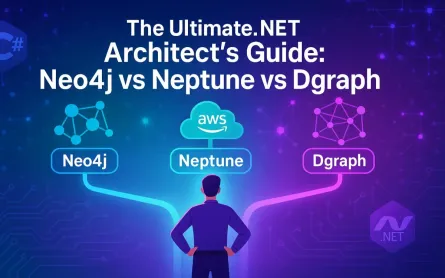
The Ultimate .NET Architect's Guide: Choosing Between Neo4j, Neptune, and Dgraph for Recommendations and Access Control
- Sudhir Mangla
- .NET , Database
- 07 Oct, 2025
1 Introduction: The Rise of Connected Data Software architecture has entered a new era—one where relationships matter as much as the entities themselves. From recommendation engines that connect
Read More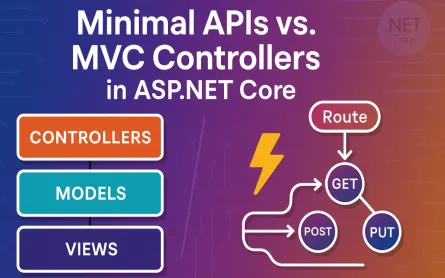
Minimal APIs vs. MVC Controllers in ASP.NET Core: Performance, Maintainability, and When to Choose Each
- Sudhir Mangla
- .NET , API Design
- 05 Oct, 2025
1 Introduction: The Evolution of Web APIs in ASP.NET Core Over the last decade, ASP.NET has undergone a remarkable transformation — not just in its runtime or tooling, but in its entire developmen
Read More