
Sudhir Mangla
Sudhir Mangla is the Sr. Director of Technology at SVAM International and the founder of Developers Voice | The Software Architects Hub. With over 22 years of hands-on experience, he has built, designed, and scaled enterprise software solutions spanning from legacy C++/Visual C++ systems to modern cloud-native, AI-powered .NET ecosystems.
His technical expertise covers the full modern stack: .NET 8/9, ASP.NET Core, Blazor, Web API, Azure Functions, Angular, React, SQL Server, Oracle, Entity Framework Core, Azure DevOps, Apache Solr, Kafka, and more. Sudhir has architected solutions across diverse paradigms—from N-tier monoliths to microservices and cutting-edge serverless architectures—always prioritizing robustness, security (OWASP Top 10), and clean-code principles like SOLID, DRY, and YAGNI.
Sudhir is a pioneer in leveraging AI-assisted development tools, including Claude Code, GitHub Copilot, and Cursor AI, to accelerate software design, refactoring, and documentation. His work increasingly integrates data analytics and intelligent automation using AI APIs such as OpenAI, Claude, and Gemini, revolutionizing how teams approach system insights, architectural validation, and developer productivity.
At Developers Voice, Sudhir’s mission is to empower software architects and developers with clear, actionable insights on architecture patterns, design principles, and real-world implementation strategies. His daily content includes comprehensive guides on:
- Software & Cloud Architecture Patterns (CQRS, Event Sourcing, FinOps, Polyglot Persistence, Edge-Native, Micro-Frontends)
- .NET and C# Best Practices (Clean Code, Performance Tuning, API Security, SOLID Principles)
- Enterprise Cloud Solutions (Azure, AWS, AI Integration, DevSecOps, Power Platform)
- Cutting-Edge Technologies (GenAI, Prompt Engineering, WASM, eBPF, React Server Components, .NET MAUI)
Sudhir bridges theory with hands-on guidance, helping engineers design and deliver high-quality, maintainable, secure, and scalable software systems. His goal is to keep architects and developers at the leading edge of architectural thinking with practical, in-depth knowledge tailored for real-world success.
Connect: sudhirmangla [at] gmail [dot] com
Change Data You Can Trust: An Architect's Guide to CDC, Auditing, and CQRS in .NET
- Sudhir mangla
- .NET , Data Engineering
- 01 Sep, 2025
1 The Inevitability of Change: Why Capturing Data Evolution is Mission-Critical Every system we design in .NET eventually collides with the same truth: data does not stay still. Orders are created
Read More
TempDB Under Pressure: The Architect's Guide to Diagnosing and Fixing SQL Server's Hidden Bottleneck
- Sudhir mangla
- AI & Machine Learning , Data Engineering
- 31 Aug, 2025
Executive Summary Data governance is no longer a passive, manual process of rule-making. In the era of petabyte-scale data lakes and stringent privacy regulations, it must be an active, automated
Read More
TempDB Under Pressure: The Architect's Guide to Diagnosing and Fixing SQL Server's Hidden Bottleneck
- Sudhir mangla
- Database , Performance Optimization
- 30 Aug, 2025
1 Introduction: The Unsung Hero and Silent Killer TempDB in SQL Server is one of those components that stays invisible until something goes wrong. When it does, the fallout is immediate, severe, a
Read More
Conversational Analytics: Building a Production-Ready Natural Language Query Engine for SQL with Semantic Kernel and .NET
- Sudhir mangla
- AI & Machine Learning , Data Analytics
- 28 Aug, 2025
1 The Dawn of Conversational Data: Beyond the Dashboard The promise of data-driven decision-making has always been tantalizing: a world where every team member, regardless of technical skill, can
Read More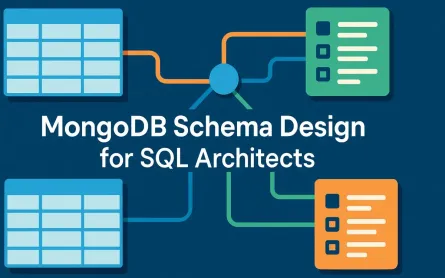
MongoDB Schema Design for the SQL Architect: Mastering One-to-Many Relationships at Scale
- Sudhir mangla
- Database , Design Principles
- 27 Aug, 2025
1 Introduction: Unlearning Normal Form for a Document World Relational databases have dominated enterprise applications for decades. They gave us reliability, consistency, and rigor—qualities that
Read More
Zero-Trust Architecture in Practice: Beyond the Buzzword with .NET and Azure
- Sudhir mangla
- Security , .NET
- 26 Aug, 2025
1 Introduction: Deconstructing the Buzzword Zero Trust has become one of the most frequently cited terms in security conversations, boardroom presentations, and vendor marketing collateral. Yet fo
Read More
Cosmos DB for Architects: Partitioning, RU Budgeting & the 9 Cost Traps to Avoid
- Sudhir mangla
- Database , Cloud Architecture
- 25 Aug, 2025
1 Introduction: The Double-Edged Sword of Infinite Scale Cosmos DB promises the kind of scale that once required years of capacity planning, endless tuning, and sleepless nights during traffic spi
Read More
From Data to Docs: A Blueprint for Using GenAI to Automatically Document Datasets and Analytics
- Sudhir mangla
- Generative AI , Data Engineering
- 24 Aug, 2025
1 The Documentation Dilemma: Why Your Best Data is Your Most Obscure Asset Every senior developer, data architect, or tech lead has felt the sting of missing or outdated documentation. The databas
Read More
The Self-Writing Report: Architecting Automated Business Insights with Azure OpenAI and Power BI
- Sudhir mangla
- AI & Machine Learning , Data Analytics
- 23 Aug, 2025
Executive Summary / Abstract For decades, business intelligence (BI) has been dominated by static dashboards and manual interpretation. While these dashboards excel at visualizing what happened,
Read More
Mastering React State Management in 2025: Redux, Signals, and Beyond for Enterprise Architects
- Sudhir mangla
- Frontend Development , Software Architecture
- 22 Aug, 2025
1 Introduction: Beyond the Hype Cycle - State Management as Architectural Pillar React turned ten in 2023. Yet in 2025, discussions around state management are more intense than ever. Why? Because
Read More