
Sudhir Mangla
Sudhir Mangla is the Sr. Director of Technology at SVAM International and the founder of Developers Voice | The Software Architects Hub. With over 22 years of hands-on experience, he has built, designed, and scaled enterprise software solutions spanning from legacy C++/Visual C++ systems to modern cloud-native, AI-powered .NET ecosystems.
His technical expertise covers the full modern stack: .NET 8/9, ASP.NET Core, Blazor, Web API, Azure Functions, Angular, React, SQL Server, Oracle, Entity Framework Core, Azure DevOps, Apache Solr, Kafka, and more. Sudhir has architected solutions across diverse paradigms—from N-tier monoliths to microservices and cutting-edge serverless architectures—always prioritizing robustness, security (OWASP Top 10), and clean-code principles like SOLID, DRY, and YAGNI.
Sudhir is a pioneer in leveraging AI-assisted development tools, including Claude Code, GitHub Copilot, and Cursor AI, to accelerate software design, refactoring, and documentation. His work increasingly integrates data analytics and intelligent automation using AI APIs such as OpenAI, Claude, and Gemini, revolutionizing how teams approach system insights, architectural validation, and developer productivity.
At Developers Voice, Sudhir’s mission is to empower software architects and developers with clear, actionable insights on architecture patterns, design principles, and real-world implementation strategies. His daily content includes comprehensive guides on:
- Software & Cloud Architecture Patterns (CQRS, Event Sourcing, FinOps, Polyglot Persistence, Edge-Native, Micro-Frontends)
- .NET and C# Best Practices (Clean Code, Performance Tuning, API Security, SOLID Principles)
- Enterprise Cloud Solutions (Azure, AWS, AI Integration, DevSecOps, Power Platform)
- Cutting-Edge Technologies (GenAI, Prompt Engineering, WASM, eBPF, React Server Components, .NET MAUI)
Sudhir bridges theory with hands-on guidance, helping engineers design and deliver high-quality, maintainable, secure, and scalable software systems. His goal is to keep architects and developers at the leading edge of architectural thinking with practical, in-depth knowledge tailored for real-world success.
Connect: sudhirmangla [at] gmail [dot] com
Building a Production-Ready Job Scheduler: Hangfire vs Quartz.NET vs Azure Functions Timer Triggers
- Sudhir Mangla
- .NET,Cloud Architecture
- 17 Sep, 2025
1 The Silent Workhorses: Why Background Job Processing is a Cornerstone of Modern Applications When most users interact with a modern application, they rarely think about the moving parts behind t
Read More
Building Event Sourcing with EventStore and .NET: From Theory to Production
- Sudhir Mangla
- Domain Driven Design,.NET
- 16 Sep, 2025
1 Introduction: Beyond the Limits of State Software engineering has always been about managing change—capturing how things evolve over time. Yet, for decades, we’ve largely defaulted to CRUD (Crea
Read More
Dapper Plus Entity Framework: Hybrid Data Access for Maximum Performance
- Sudhir Mangla
- .NET,Performance Optimization
- 15 Sep, 2025
1 Introduction: The ORM Performance vs. Productivity Dilemma Modern software projects increasingly operate under two seemingly opposing forces: the need for rapid development and the demand for un
Read More
The Claude Code: From Concept to Container: An Architect's Guide to the AI-Powered SDLC
- Sudhir mangla
- AI & Machine Learning,Generative AI
- 14 Sep, 2025
1 Introduction: The Paradigm Shift in Software Development Software development has always been shaped by new abstractions—assembly to high-level languages, bare-metal to cloud, monoliths to micro
Read More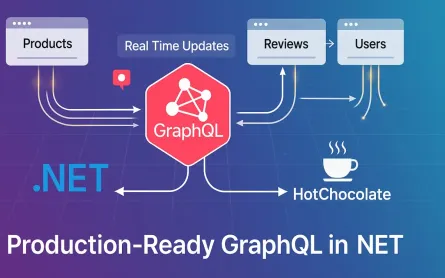
Building Production-Ready GraphQL APIs with HotChocolate: DataLoaders, Subscriptions, and Federation
- Sudhir mangla
- API Design,Microservices
- 13 Sep, 2025
1 Introduction: The Case for a Modern GraphQL Stack in .NET GraphQL has steadily evolved from being a niche technology championed by early adopters to becoming a cornerstone of modern API design.
Read More
Orleans Virtual Actors in Practice: Building Scalable Stateful Services Without the Complexity
- Sudhir mangla
- Microservices,.NET
- 11 Sep, 2025
1 The Inescapable Challenge of Stateful Services in a Stateless World Every distributed systems engineer eventually runs into the same paradox: modern cloud-native platforms encourage stateless de
Read More
Building Production-Ready Dashboards in Python with Streamlit + DuckDB: From Raw Files to Enterprise-Grade Analytics
- Sudhir mangla
- Data Analytics,DevOps & CI/CD
- 10 Sep, 2025
1 Introduction: The Need for Speed and Simplicity in Data Apps Data is only valuable if decision-makers can interact with it quickly, confidently, and at scale. Yet most organizations still feel t
Read More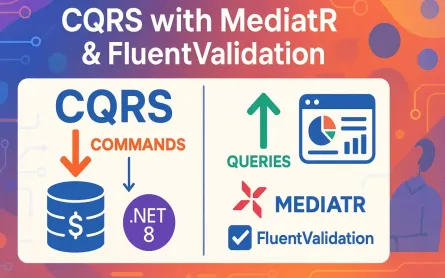
Implementing CQRS with MediatR and FluentValidation: A Production-Ready Pattern Library
- Sudhir mangla
- .NET,Software Architecture
- 09 Sep, 2025
1 Introduction: The Monolith's Mid-life Crisis Every seasoned engineer eventually faces the same dilemma: the once “clean” layered architecture has turned into a swamp of brittle dependencies, blo
Read More
Offline-First Done Right: Sync Patterns for Real-World Networks
- Sudhir mangla
- Mobile Development,Database
- 08 Sep, 2025
1 The Modern Imperative for Offline-First Offline-first development is no longer an exotic strategy reserved for niche apps like airline check-in tools or rural farming software. It has become the
Read More
Feature Flags at Enterprise Scale with .NET: Azure App Configuration + OpenFeature Patterns
- Sudhir mangla
- .NET,Cloud Architecture
- 08 Sep, 2025
1 Introduction: The End of "Big Bang" Releases Software engineering has long wrestled with the tension between shipping fast and shipping safely. For decades, the dominant model was the “big bang”
Read More