
Sudhir Mangla
Sudhir Mangla is the Sr. Director of Technology at SVAM International and the founder of Developers Voice | The Software Architects Hub. With over 22 years of hands-on experience, he has built, designed, and scaled enterprise software solutions spanning from legacy C++/Visual C++ systems to modern cloud-native, AI-powered .NET ecosystems.
His technical expertise covers the full modern stack: .NET 8/9, ASP.NET Core, Blazor, Web API, Azure Functions, Angular, React, SQL Server, Oracle, Entity Framework Core, Azure DevOps, Apache Solr, Kafka, and more. Sudhir has architected solutions across diverse paradigms—from N-tier monoliths to microservices and cutting-edge serverless architectures—always prioritizing robustness, security (OWASP Top 10), and clean-code principles like SOLID, DRY, and YAGNI.
Sudhir is a pioneer in leveraging AI-assisted development tools, including Claude Code, GitHub Copilot, and Cursor AI, to accelerate software design, refactoring, and documentation. His work increasingly integrates data analytics and intelligent automation using AI APIs such as OpenAI, Claude, and Gemini, revolutionizing how teams approach system insights, architectural validation, and developer productivity.
At Developers Voice, Sudhir’s mission is to empower software architects and developers with clear, actionable insights on architecture patterns, design principles, and real-world implementation strategies. His daily content includes comprehensive guides on:
- Software & Cloud Architecture Patterns (CQRS, Event Sourcing, FinOps, Polyglot Persistence, Edge-Native, Micro-Frontends)
- .NET and C# Best Practices (Clean Code, Performance Tuning, API Security, SOLID Principles)
- Enterprise Cloud Solutions (Azure, AWS, AI Integration, DevSecOps, Power Platform)
- Cutting-Edge Technologies (GenAI, Prompt Engineering, WASM, eBPF, React Server Components, .NET MAUI)
Sudhir bridges theory with hands-on guidance, helping engineers design and deliver high-quality, maintainable, secure, and scalable software systems. His goal is to keep architects and developers at the leading edge of architectural thinking with practical, in-depth knowledge tailored for real-world success.
Connect: sudhirmangla [at] gmail [dot] com
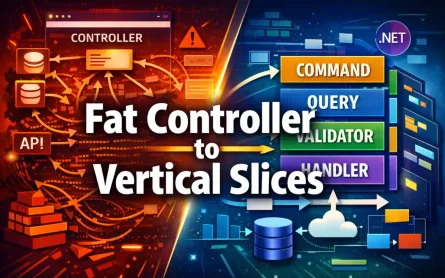
Clean Code to Clean Architecture: Refactoring a Fat Controller into Vertical Slices in ASP.NET Core
1 Clean Code to Clean Architecture: Refactoring a Fat Controller into Vertical Slices in ASP.NET Core Most teams do not decide to build a fat controller. They arrive there one deadline at a time
Read More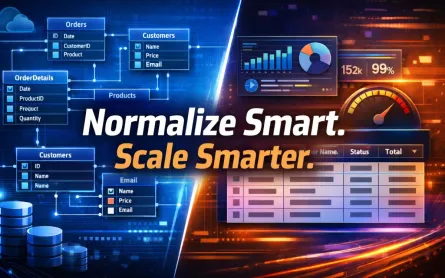
Normalization vs. Reality: When to Denormalize for Throughput on SQL Server & Azure SQL
- Sudhir Mangla
- Database,Performance Optimization
- 13 Apr, 2026
1 Normalization vs. Reality: When to Denormalize for Throughput on SQL Server & Azure SQL 1.1 The Architect’s Paradox: Purity vs. Performance Normalization still matters. Third Normal For
Read More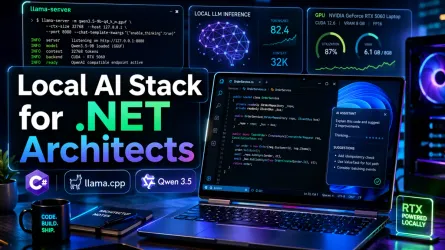
Llama.cpp on Windows 11 with Qwen 3.5: A Practical Local AI Setup for .NET Architects
1 The 2026 Local AI Landscape: Moving Beyond the Wrapper 1.1 The Architect’s Choice: Why convenience (Ollama) is being traded for precision (llama.cpp) A year ago, Ollama was the defaul
Read More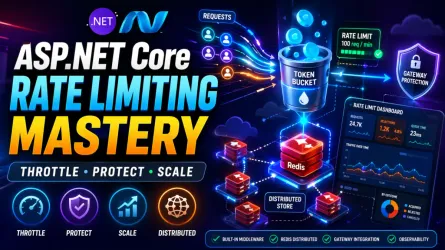
Mastering ASP.NET Core Rate Limiting: From Basic Throttling to Distributed Token Buckets
- Sudhir Mangla
- Microservices,Api design
- 08 Apr, 2026
1 The Architecture of Limits: Why Middleware Isn't Enough Rate limiting is often introduced as a defensive middleware feature: stop abuse, return 429, move on. That view is too narrow for modern
Read More
Vector Databases for .NET Developers: Qdrant, Milvus, and Pinecone Compared
- Sudhir Mangla
- AI Architecture,Database
- 28 Feb, 2026
For .NET architects in 2026, the conversation has moved well past "what is a vector." The real questions now are: which database fits your scale, what does it cost at 100 million vectors, and how does
Read More
Azure Container Apps vs AKS for .NET Workloads: Decision Framework for 2026
- Sudhir Mangla
- Cloud Architecture,Azure
- 27 Feb, 2026
The question used to be whether to containerize .NET applications at all. That debate ended years ago. In 2026, the real question is which Azure container platform serves your workload, your team, and
Read More
Optimistic vs Pessimistic Concurrency in EF Core: Choosing the Right Strategy
- Sudhir Mangla
- Database,Concurrency control
- 26 Feb, 2026
1 The Concurrency Landscape for .NET Architects Every multi-user application faces the same fundamental question: what happens when two users modify the same data at the same time? If you don't
Read More
Secrets Management Beyond Key Vault in Enterprise .NET: Rotation, Break-Glass Access, and Disaster Recovery
- Sudhir Mangla
- Security,Devsecops
- 25 Feb, 2026
1 The Modern Secrets Crisis: Why Vaulting Isn't Enough Moving secrets into a vault solved one problem: credentials were no longer scattered across source control and configuration files. That wa
Read More
Background Jobs the Right Way on Azure: Functions, WebJobs, and Container Apps Jobs for .NET Workloads
- Sudhir Mangla
- Azure,Cloud Architecture
- 17 Feb, 2026
1 The Modern Landscape of Azure Background Processing Background processing on Azure has evolved from "run this somewhere in the background" to a set of well-defined architectural choices. What
Read More
Modern C# Collections in Practice: List, Dictionary, Immutable Collections, and Custom Structs
- Sudhir Mangla
- C#,Performance Optimization
- 16 Feb, 2026
1 Why Collection Choice Is an Architectural Decision Modern .NET systems don't fail because a for loop was slow. They fail because a hot path allocates too much, because a dictionary lookup cr
Read More