
Sudhir Mangla
Sudhir Mangla is the Sr. Director of Technology at SVAM International and the founder of Developers Voice | The Software Architects Hub. With over 22 years of hands-on experience, he has built, designed, and scaled enterprise software solutions spanning from legacy C++/Visual C++ systems to modern cloud-native, AI-powered .NET ecosystems.
His technical expertise covers the full modern stack: .NET 8/9, ASP.NET Core, Blazor, Web API, Azure Functions, Angular, React, SQL Server, Oracle, Entity Framework Core, Azure DevOps, Apache Solr, Kafka, and more. Sudhir has architected solutions across diverse paradigms—from N-tier monoliths to microservices and cutting-edge serverless architectures—always prioritizing robustness, security (OWASP Top 10), and clean-code principles like SOLID, DRY, and YAGNI.
Sudhir is a pioneer in leveraging AI-assisted development tools, including Claude Code, GitHub Copilot, and Cursor AI, to accelerate software design, refactoring, and documentation. His work increasingly integrates data analytics and intelligent automation using AI APIs such as OpenAI, Claude, and Gemini, revolutionizing how teams approach system insights, architectural validation, and developer productivity.
At Developers Voice, Sudhir’s mission is to empower software architects and developers with clear, actionable insights on architecture patterns, design principles, and real-world implementation strategies. His daily content includes comprehensive guides on:
- Software & Cloud Architecture Patterns (CQRS, Event Sourcing, FinOps, Polyglot Persistence, Edge-Native, Micro-Frontends)
- .NET and C# Best Practices (Clean Code, Performance Tuning, API Security, SOLID Principles)
- Enterprise Cloud Solutions (Azure, AWS, AI Integration, DevSecOps, Power Platform)
- Cutting-Edge Technologies (GenAI, Prompt Engineering, WASM, eBPF, React Server Components, .NET MAUI)
Sudhir bridges theory with hands-on guidance, helping engineers design and deliver high-quality, maintainable, secure, and scalable software systems. His goal is to keep architects and developers at the leading edge of architectural thinking with practical, in-depth knowledge tailored for real-world success.
Connect: sudhirmangla [at] gmail [dot] com
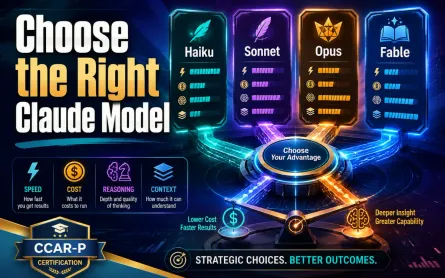
Select Appropriate Claude Models Based on Trade-offs | CCAR-P Exam Guide | CCAR-P Domain 2
Select Appropriate Claude Models Based on Trade-offs CCAR-P Exam Guide — Domain 2: Claude Models, Prompting & Context Engineering Exam: Claude Certified Architect – Professional **Exam
Read More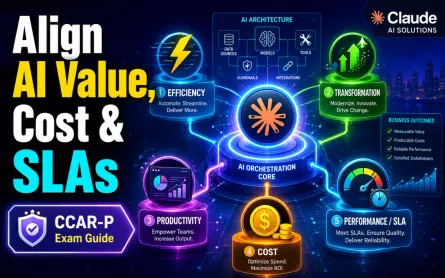
Align Claude AI Solutions to Business Value & SLAs | CCAR-P Exam Guide | CCAR-P Domain 1
Align Claude Solutions to Business Value Pillars CCAR-P Domain 1 Exam Guide: Efficiency, Transformation, Productivity, Cost & Performance SLAs The official **Claude Certified Architect – Pr
Read More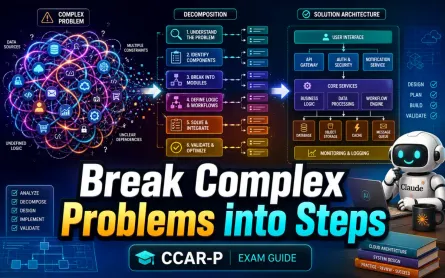
Apply Decomposition Techniques for Complex Problem Solving | CCAR-P Exam Guide | CCAR-P Domain 1
Apply Decomposition Techniques for Complex Problem Solving CCAR-P Domain 1 — Solution Design & Architecture Exam objective: Translate business problems into Claude-based AI solutions →
Read More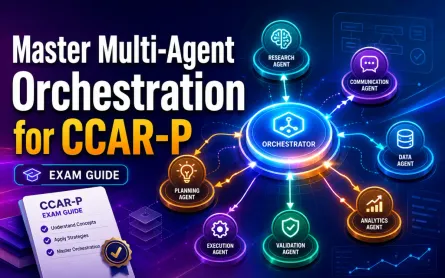
Design Multi-Agent Systems & Orchestration Strategies | CCAR-P Exam Guide | CCAR-P Domain 1
Design Multi-Agent Systems and Orchestration Strategies CCAR-P Domain 1 — Solution Design & Architecture Exam Guide Target objective: Design multi-agent systems and orchestration strate
Read More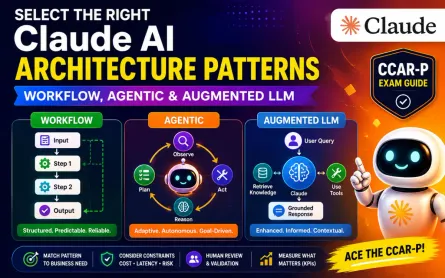
Select Claude AI Architecture Patterns: Workflow, Agentic & Augmented LLM | CCAR-P Exam Guide | CCAR-P Domain 1
Select Appropriate Architectural Patterns: Workflow, Agentic, and Augmented LLM CCAR-P Domain 1 — Solution Design & Architecture Exam objective: *Select appropriate architectural patter
Read More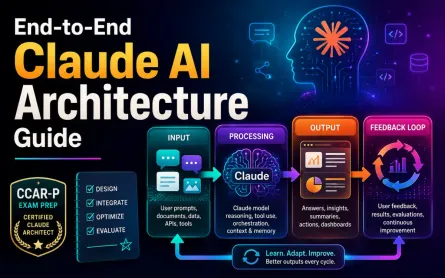
Design End-to-End Claude AI Architectures: CCAR-P Exam Guide | CCAR-P Domain 1
CCAR-P Domain 1 Study Guide Design End-to-End Architectures: Input → Processing → Output → Feedback Loops Domain: Solution Design & Architecture Domain Weight: 17% **Target Object
Read More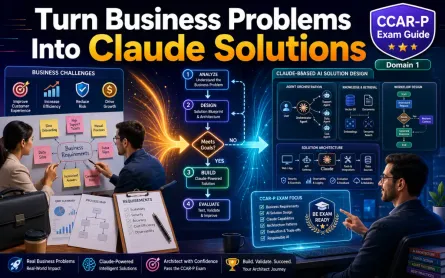
Translate Business Problems into Claude-Based AI Solutions: CCAR-P Exam Guide | CCAR-P Domain 1
Domain 1: Solution Design & Architecture — 17% Topic 1.1: Translate Business Problems into Claude-Based AI Solutions What You Need to Know for the Exam This objective tests whether y
Read More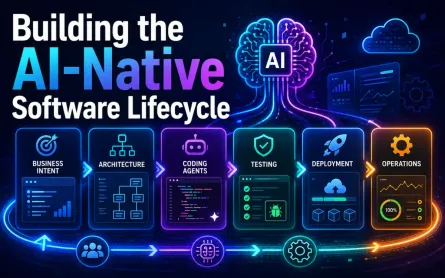
The AI-Native Software Development Lifecycle: A Practical Guide for Developers, Leads, and Architects
1 Why the Traditional Software Lifecycle Is Being Rewritten The software development lifecycle has always evolved around its main constraint. Waterfall addressed the need for predictability. Agi
Read More
How to Use AI for Income Tax Filing: A Step-by-Step Guide for Salaried Professionals (US, UK, India)
Most salaried professionals do not struggle with income tax filing because tax is impossible. They struggle because the data is scattered across salary slips, tax forms, bank statements, broker report
Read More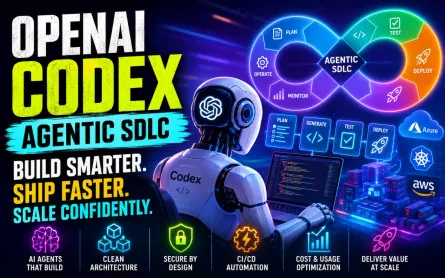
OpenAI Codex Advanced Workflow: The Architect’s Blueprint for Agentic SDLC
- Sudhir Mangla
- Agentic AI Systems,AI Coding Agents
- 19 Jun, 2026
1 The Paradigm Shift from Inline Autocomplete to Agentic SDLC AI-assisted development has moved beyond inline suggestions. The older model was simple: the developer typed, the tool predicted the
Read More