Blog Posts

ACID in Practice for .NET: Isolation Levels, Anomalies, and Transaction Pitfalls
- Sudhir Mangla
- Database , .NET
- 09 Feb, 2026
1 Beyond the Acronym: Why ACID Is Not a Silver Bullet ACID is often described as a guarantee, something that magically keeps data correct as long as you “use transactions.” Senior developers know
Read More
Building High-Performance REST APIs in Go: Gin, Echo, and Standard Library Compared
- Sudhir mangla
- Go , API Design
- 07 Feb, 2026
1 The Landscape of Go Web Development Go’s web ecosystem has reached a phase where architectural posture matters more than framework novelty. For most production REST APIs, the limiting factor
Read More
Go for C# Developers: Mindset Shifts, Patterns, and Productivity Tips
- Sudhir mangla
- Go , Software Architecture
- 06 Feb, 2026
1 The Architectural Pivot: Why Go in 2026? Go’s rise in infrastructure, distributed systems, and cloud-native platforms has changed what architects expect from a backend language. Senior C# develo
Read More
Building Enterprise AI Agents with Semantic Kernel and RAG in .NET
- Sudhir mangla
- AI & Machine Learning , Generative AI
- 03 Feb, 2026
1 The Modern Enterprise Knowledge Challenge Enterprise teams are increasingly adding AI assistants to internal tools, but most quickly run into the limits of simple RAG implementations. A basic “v
Read More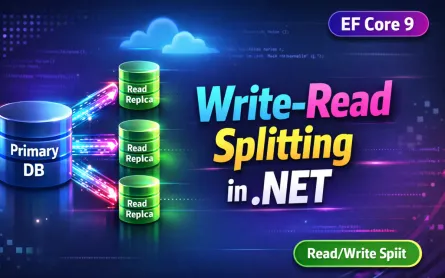
Read Replicas and Write-Read Splitting in .NET Applications
- Sudhir Mangla
- Database , Performance Optimization
- 02 Feb, 2026
1 Foundations of Read-Scale Architecture A read-scale architecture separates transactional write operations from computationally expensive read workloads. In real-world .NET systems, the primary d
Read More
Mobile App Performance Budgets: Startup Time, Frame Rate, and Battery Drain Metrics That Actually Matter
- Sudhir mangla
- Mobile Development , Performance Optimization
- 01 Feb, 2026
1 The Performance Budget Philosophy: Why Speed is a Trust Signal in 2026 Mobile engineering teams in 2026 operate under very different constraints than even a few years ago. Devices ship with high
Read More
Data Encryption at Rest and In Transit for .NET Applications | Practical Security Guide
- Sudhir mangla
- Security , .NET
- 29 Jan, 2026
1 The Modern .NET Security Landscape: Defense-in-Depth vs. Zero Trust Modern .NET applications rarely operate in isolated environments. They run in public clouds, communicate through APIs, and rel
Read More
Internationalization Architecture for Global .NET Applications | ICU, Localization, and Cultural Formatting
- Sudhir Mangla
- Software Architecture , .NET
- 28 Jan, 2026
1 The Modern .NET Internationalization Strategy Global .NET applications now operate across dozens of locales, currency systems, writing systems, and cultural conventions. The problem space is no
Read More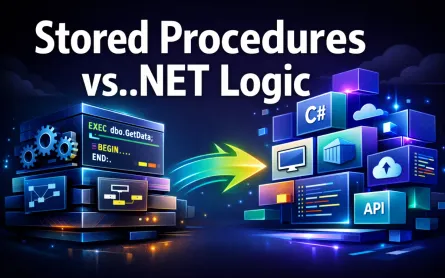
Modernizing Stored Procedure-Heavy Applications: When to Move Logic to .NET
- Sudhir Mangla
- Database , Software Architecture
- 27 Jan, 2026
1 The Legacy Debt: Understanding the Stored Procedure Gravity Most enterprise systems built between 2000 and 2018 relied heavily on stored procedures (SPs) as the primary home for business logic.
Read More
Claude Code in 2026: A Practical End-to-End Workflow Across the SDLC
- Sudhir mangla
- AI & Machine Learning , Generative AI
- 26 Jan, 2026
1 The Agentic Shift: Software Engineering with Claude Code Software engineering is evolving, but not in the way most trend pieces describe. Teams still write code, review pull requests, and run pr
Read More